
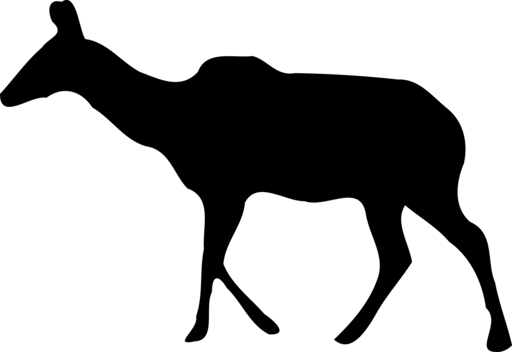
Bongo
Tragelaphus eurycerus
Silhouette: Robert Hering · PhyloPic
- KingdomAnimalia (Animals)
- PhylumChordata (Chordates)
- ClassMammalia (Mammals)
- OrderArtiodactyla (Even-toed Ungulates and Cetaceans)
- FamilyBovidae (Bovids)
- GenusTragelaphus (Spiral-horned Antelopes)
- SpeciesTragelaphus eurycerus (Bongo)
About the Bongo
The bongo (Tragelaphus eurycerus) is a large, mostly nocturnal, forest-dwelling antelope, native to sub-Saharan Africa. Bongos are characterised by a striking reddish-brown coat, black-and-white markings, white-yellow stripes, and long, slightly spiraled horns. Bongos have complex social interactions and are found in African dense forest mosaics. They are the third-largest antelope in the world.
In 2000, the Association of Zoos and Aquariums in the US upgraded the bongo to a Species Survival Plan participant and in 2006 added the Bongo Restoration to Mount Kenya Project to its list of the Top Ten Wildlife Conservation Success Stories of the year. As of 2013, these successes have been compromised by reports of possibly only 100 mountain bongos left in the wild due to logging and poaching.
The scientific name of the bongo is Tragelaphus eurycerus, and it belongs to the family Bovidae. It was first described by Irish naturalist William Ogilby in 1837. The generic name Tragelaphus is composed of two Greek words: trag-, meaning a goat; and elaphos, meaning deer. The specific name eurycerus originated from the fusion of eurus (broad, widespread) and keras (an animal's horn... Wikipedia →
Recent sightings of Bongo in Aberdare National Park
LIVEiNaturalistClosest Relatives at Aberdare National Park

 Northern Bushbuck
Tragelaphus scriptus

 African Buffalo
Syncerus caffer

 Waterbuck
Kobus ellipsiprymnus

 Bush Duiker
Sylvicapra grimmia

 Suni
Neotragus moschatus

 Common Eland
Taurotragus oryx

Impala
Aepyceros melampus

Thomson's Gazelle
Eudorcas thomsonii

 Black Fronted Duiker
Cephalophus nigrifrons

 Hartebeest
Alcelaphus buselaphus

 Bohor Reedbuck
Redunca redunca

 Giant Forest Hog
Hylochoerus meinertzhageni
Global Distribution
Warmer areas are where this animal is recorded most often.
Parks Where Found
| # | Park | Country | Daily sighting probability |
|---|---|---|---|
| 1 | Aberdare National Park | 🇰🇪 Kenya |
More parks will be added in future updates.