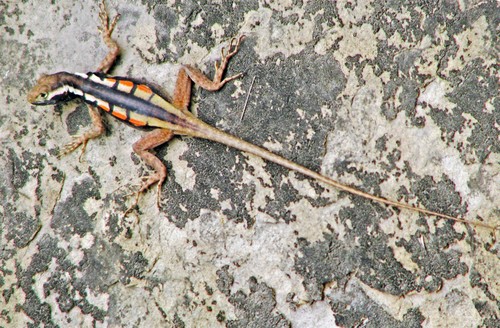

Black Lava Lizard
Tropidurus melanopleurus
Silhouette: Heitor Campos de Sousa · PhyloPic
- KingdomAnimalia (Animals)
- PhylumChordata (Chordates)
- ClassSquamata
- FamilyTropiduridae (Neotropical Ground Lizards)
- GenusTropidurus (Lava Lizards)
- SpeciesTropidurus melanopleurus (Black Lava Lizard)
About the Black Lava Lizard
Tropidurus melanopleurus, the black lava lizard, is a species of lizard from the Andean region of western South America, ranging between the three different countries of Peru, Bolivia, and Argentina. It was described in 1902 by zoologist George Boulenger. It is fairly small in size, but is known for its different appearance and differing size between the males and females. However, while the patterns of color may be different between the sexes, both males and females have a very distinct physical color array with a patterned mix of green, orange, cream, black and or brown. This species of lizard lives in a generally warm to hot climate all year round and spends most of its day on the side of vertical rock structures in the mountains, feeding on various types of insects, with an emphasis on ants.
Female individuals of this species have a black to brown head with a prominent cream stripe across the temporal region of the head and back. The females have a black dorsum with a series of 4-6 red, cream, and green bands/large spots. The adult female SVL (Snout-Vent Length) is about 64.2 +/- 4.2 mm.
Male individuals of this species have a vertebral and dorsal crest that are... Wikipedia →
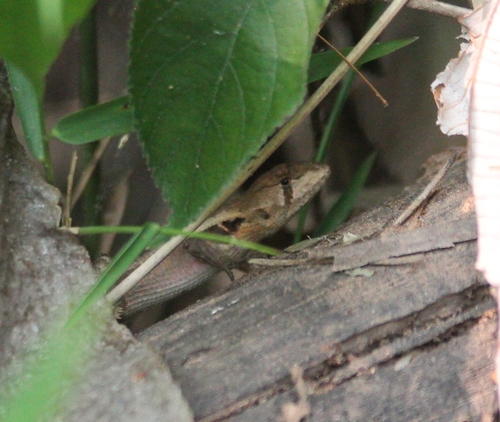
Recent sightings of Black Lava Lizard in Amboró National Park
LIVEiNaturalistClosest Relatives at Amboró National Park



Global Distribution
Warmer areas are where this animal is recorded most often.
Parks Where Found
| # | Park | Country | Daily sighting probability |
|---|---|---|---|
| 1 | Amboró National Park | 🇧🇴 Bolivia | |
| 2 | Madidi National Park | 🇧🇴 Bolivia |
Quick answers
What are the chances of seeing a Black Lava Lizard in Amboró National Park?
About 40% of wildlife watchers report a Black Lava Lizard sighting in Amboró National Park, based on 6 verified sightings from GBIF citizen-science data.
When is the best time to see Black Lava Lizard in Amboró National Park?
August has the highest sighting rate for Black Lava Lizard in Amboró National Park in our monthly data.