


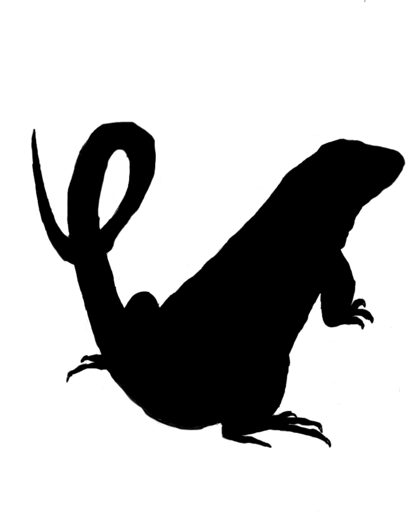
Diving Lizard
Uranoscodon superciliosus
Silhouette: Natalie Claunch · PhyloPic
- KingdomAnimalia (Animals)
- PhylumChordata (Chordates)
- ClassSquamata
- FamilyTropiduridae (Neotropical Ground Lizards)
- GenusUranoscodon
- SpeciesUranoscodon superciliosus (Diving Lizard)
About the Diving Lizard
Uranoscodon is a monotypic genus of iguanomorph lizard belonging to the family Tropiduridae, the Neotropical ground lizards. Its sole member, Uranoscodon superciliosus, is commonly known as the diving lizard, brown tree climber or mophead iguana. It is found near water in the Amazon rainforest of South America.
Uranoscodon was first described as a genus in 1825 by the German naturalist Johann Jakob Kaup, its only species being Lacerta superciliosa which had been described by Carl Linnaeus in the 10th edition of his Systema Naturae published in 1758. Linnaeus gave the type locality as "Indiis", however, in 1973 this was narrowed down to the confluence of the Cottica River and Perica Creek in Suriname. The genus Uranoscodon is classified within the family Tropiduridae which, in turn, is within the clade Iguanoidea within the infraorder Iguanomorpha, which is also known as Iguania.
Uranoscodon superciliosus has a relatively small head, with a body and tail which show latero-lateral compression but it is not extremely flattened. It has a relatively long tail and legs. The overall colour is brown. There is a frill around the heads of adults which gives rise... Wikipedia →
Recent sightings of Diving Lizard in Anavilhanas National Park
LIVEiNaturalistClosest Relatives at Anavilhanas National Park


Global Distribution
Warmer areas are where this animal is recorded most often.
Parks Where Found
| # | Park | Country | Daily sighting probability |
|---|---|---|---|
| 1 | Amacayacu National Natural Park | 🇨🇴 Colombia | |
| 2 | Anavilhanas National Park | 🇧🇷 Brazil | |
| 3 | Brownsberg Nature Park | 🇸🇷 Suriname |