


Giant Madagascan Hognose Snake
Leioheterodon madagascariensis
Silhouette: Ferran Sayol · PhyloPic
- KingdomAnimalia (Animals)
- PhylumChordata (Chordates)
- ClassSquamata
- FamilyPseudoxyrhophiidae (Madagascar Brook Snakes)
- GenusLeioheterodon (Madagascar Hognose Snakes)
- SpeciesLeioheterodon madagascariensis (Giant Madagascan Hognose Snake)
About the Giant Madagascan Hognose Snake
Leioheterodon madagascariensis, the Malagasy, Madagascar or Madagascan giant hognose (snake), is a harmless species of pseudoxyrhophiid snake endemic to the island nation of Madagascar. The species is also found on the country's smaller islands of Nosy Be, Nosy Mangabe, and Nosy Sakatia, as well as on the Comoros archipelago, in the Mozambique Channel. It is thought, by some, to have been introduced to the Grande Comoro. Mature giant hognose snakes can measure between 130 and 180 cm (4 ft. to nearly 6 ft., or between 1-2 meters) in length, and be roughly the thickness of an average adult human's arm.
Similarly to the Heterodon or Lystrophis genera of new-world hognoses, the Madagascar giant hognose, when threatened, will raise its head, open its mouth and inflate the skin around its neck and chin, superficially mimicking a cobra (or even a bearded dragon) in defensive posture, in an attempt to look larger and more intimidating. This snake is considered to be opisthoglyphous ("rear-fanged" or "rear-fanged venomous"), as it possess a pair of pin-like, widely spaced teeth at the back of the mouth, connected to the maxilla.
Through a funnel-like formation in each tooth, hognose snakes can inject a paralyzing saliva to subdue their prey. Studies have shown that the giant hognose does not use this "envenomation" technique to outright kill their prey, instead relying mainly on constriction. Thus the placement of these teeth at the rear of the mouth (combined with their ability to deliver a paralyzing/toxic salival fluid) aids the snake in controlling "squirmy" prey, as the animal will potentially take longer to expire by constriction, compared to a single, deadly bite from a highly-venomous snake species.
For these reasons, the physical presence of the Duvernoy's gland is unclear in this species. The toxic saliva, while effective at controlling wriggling small animals, only irritates human skin and is not deadly. Furthermore, most hognoses are not prone to bite large mammals—including humans—as their teeth are placed far in the back of the mouth, requiring the snake to exert somewhat greater effort during a bite than other, "frontal-fanged" snakes (elapids, vipers, colubrids). Typical prey consists of various small reptiles, frogs, toads, birds, and their nestlings and eggs. Other smaller snakes may be eaten occasionally, as well as small mammals, such as rodents, tenrecs or mouse lemurs and their offspring.
The primary predators of the Madagascar giant hognose snake are birds of prey and other avian species with a taste for snakes. Wikipedia →
Recent sightings of Giant Madagascan Hognose Snake in Ankarafantsika National Park
LIVEiNaturalistClosest Relatives at Ankarafantsika National Park

 Blonde Hognose Snake
Leioheterodon modestus

 Madagascar Cat-eyed Snake
Madagascarophis colubrinus
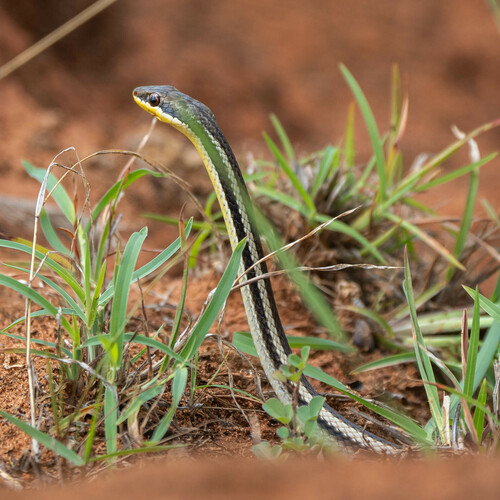
Bernier's Striped Snake
Dromicodryas bernieri
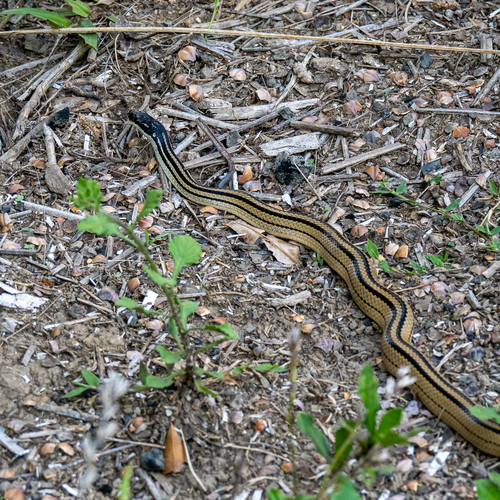
Four-striped Snake
Dromicodryas quadrilineatus

Madagascar Leaf-nosed Snake
Langaha madagascariensis

Tiny Night Snake
Ithycyphus miniatus
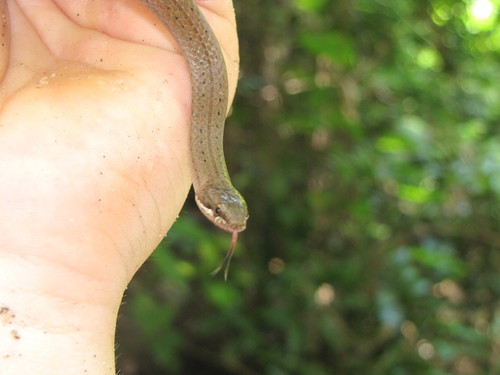
White-lipped Smooth Snake
Liophidium torquatum

Vaillant's Madagascar Ground Snake
Liophidium vaillanti
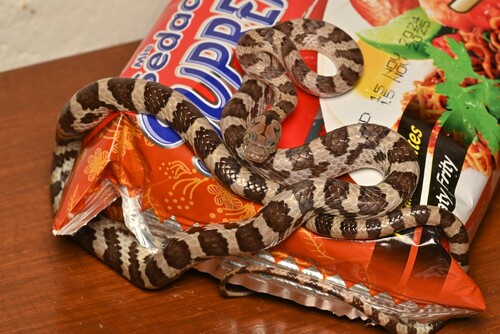
Ampijoroa Tree Snake
Lycodryas pseudogranuliceps
Global Distribution
Warmer areas are where this animal is recorded most often.
Parks Where Found
| # | Park | Country | Daily sighting probability |
|---|---|---|---|
| 1 | Ankarafantsika National Park | 🇲🇬 Madagascar | |
| 2 | Ranomafana National Park | 🇲🇬 Madagascar |
Quick answers
What are the chances of seeing a Giant Madagascan Hognose Snake in Ankarafantsika National Park?
About 80% of wildlife watchers report a Giant Madagascan Hognose Snake sighting in Ankarafantsika National Park, based on 44 verified sightings from GBIF citizen-science data.
When is the best time to see Giant Madagascan Hognose Snake in Ankarafantsika National Park?
April has the highest sighting rate for Giant Madagascan Hognose Snake in Ankarafantsika National Park in our monthly data.