


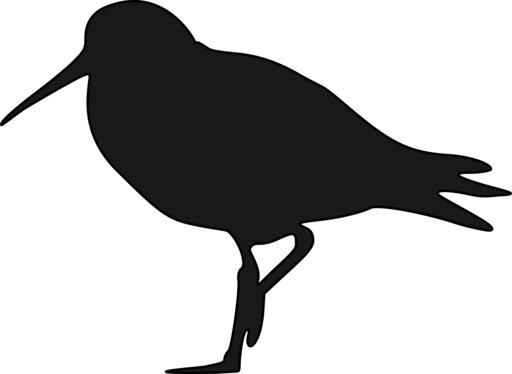
VOC
Haematopus unicolor
Silhouette: terngirl · PhyloPic
- KingdomAnimalia (Animals)
- PhylumChordata (Chordates)
- ClassAves (Birds)
- OrderCharadriiformes (Shorebirds and Allies)
- FamilyHaematopodidae (Oystercatchers)
- GenusHaematopus (Oystercatchers)
- SpeciesHaematopus unicolor (VOC)
About the VOC
The variable oystercatcher (Haematopus unicolor) is a species of wader in the family Haematopodidae. It is endemic to New Zealand. The Māori name is tōrea-pango. They are also known as 'red bills'. "Variable" refers to the frontal plumage, which ranges from pied through mottled to all black. They are polymorphic meaning they have different genetic variants. These color differences are attributed to the latitude of the habitat, where the northernmost oystercatchers have significantly more white on their bodies than those of southern origin. All Stewart Island variable oystercatchers are black. They have pink legs, an orange eye ring and orange-red beaks. Similar to a needle in shape, the bill is thin and long, and darkens to a deep red color during the breeding season. Males are around 678 grams and females slightly larger at around 724 grams. Length of individuals range from 42 to 47 cm from beak to tail and have a short, sturdy body with a thick neck.
Variables can be identified as they are slightly larger than the South Island pied oystercatcher (SIPO are around 550 grams). Occasionally completely black, but if they are pied (black and white) they can be easily confused... Wikipedia →
Recent sightings of VOC in Aoraki Mount Cook National Park
LIVEiNaturalistClosest Relatives at Aoraki Mount Cook National Park

 South Island Pied Oystercatcher
Haematopus finschi

 Black-fronted Tern
Chlidonias albostriatus

 Dominican Gull
Larus dominicanus

 Masked Lapwing
Vanellus miles

 Black-billed Gull
Chroicocephalus bulleri

 Black Stilt
Himantopus novaezelandiae

 Wrybill
Anarhynchus frontalis

 White-headed Stilt
Himantopus leucocephalus

 Caspian Tern
Hydroprogne caspia

Silver Gull
Chroicocephalus novaehollandiae

White-winged Tern
Chlidonias leucopterus
Global Distribution
Warmer areas are where this animal is recorded most often.
Parks Where Found
| # | Park | Country | Daily sighting probability |
|---|---|---|---|
| 1 | Rakiura National Park | 🇳🇿 New Zealand | |
| 2 | Abel Tasman National Park | 🇳🇿 New Zealand | |
| 3 | Fiordland National Park | 🇳🇿 New Zealand | |
| 4 | Aoraki Mount Cook National Park | 🇳🇿 New Zealand |