

Grivet
Chlorocebus aethiops
Silhouette: PhyloPic · PhyloPic
- KingdomAnimalia (Animals)
- PhylumChordata (Chordates)
- ClassMammalia (Mammals)
- OrderPrimates
- FamilyCercopithecidae (Old World Monkeys)
- GenusChlorocebus (Savannah Monkeys)
- SpeciesChlorocebus aethiops (Grivet)
About the Grivet
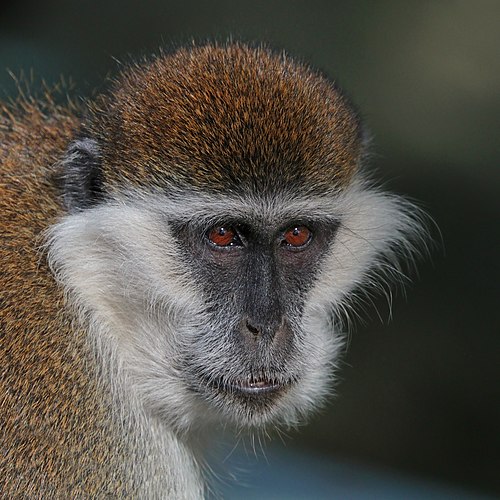
The grivet (Chlorocebus aethiops) is an Old World monkey with long white tufts of hair along the sides of its face. Some authorities consider this and all of the members of the genus Chlorocebus to be a single species, Cercopithecus aethiops. As here defined, the grivet is restricted to Ethiopia, Sudan, Djibouti, and Eritrea. In the southern part of its range, it comes into contact with the closely related vervet monkey (C. pygerythrus) and Bale Mountains vervet (C. djamdjamensis). Hybridization between them is possible, and may present a threat to the vulnerable Bale Mountains vervet. Unlike that species, the grivet is common and rated as least concern by the IUCN.
The grivet's facial skin, hands, and feet are black. The face has a white line above the eyes. It has long, white whiskers on the cheeks. The fur on the back has an olive color, while the front is white. The skin on the stomach has a blue tint. The fur has a bristly feel. The approximate head and body length for males is 49 cm (19 in) and 42.6 cm (16.8 in) for females. The length of the tail for males is about 30–50 cm (12–20 in). The body mass ranges from 3.4 to 8.0 kg (7.5 to 17.6 lb), with females... Wikipedia →
Recent sightings of Grivet in Bale Mountains National Park
LIVEiNaturalistClosest Relatives at Bale Mountains National Park


Global Distribution
Warmer areas are where this animal is recorded most often.
Parks Where Found
| # | Park | Country | Daily sighting probability |
|---|---|---|---|
| 1 | Awash National Park | 🇪🇹 Ethiopia | |
| 2 | Bale Mountains National Park | 🇪🇹 Ethiopia |