
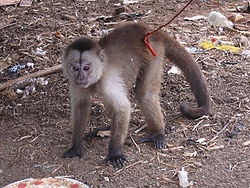



chestnut weeper capuchin
Cebus castaneus
Silhouette: Sarah Werning · PhyloPic
- KingdomAnimalia (Animals)
- PhylumChordata (Chordates)
- ClassMammalia (Mammals)
- OrderPrimates
- FamilyCebidae (Cebid Monkeys)
- GenusCebus (Gracile Capuchins)
- SpeciesCebus castaneus (chestnut weeper capuchin)
About the chestnut weeper capuchin
The chestnut capuchin or chestnut weeper capuchin (Cebus castaneus) is a species of capuchin monkey from northeastern Brazil, southern Guyana, Suriname, and French Guiana. It was described in 1851 as a subspecies of the wedge-capped capuchin (C. olivaceus). However, a 2012 study found grounds to at least tentatively recognize it as a distinct species. The American Society of Mammalogists, IUCN Red List, and ITIS all follow this classification.
It is found in northeastern Brazil, southern Guyana, and most of Suriname and French Guiana. It inhabits the uplands of the Guiana Shield north of the Amazon River, east of the Rio Negro, limited on both sides by the Branco River, and from here ranges north, east of the Orinoco and Ventuari rivers, to Guyana. Its range still remains poorly known. Wikipedia →
Recent sightings of chestnut weeper capuchin in Brownsberg Nature Park
LIVEiNaturalist


Global Distribution
Warmer areas are where this animal is recorded most often.
Parks Where Found
| # | Park | Country | Daily sighting probability |
|---|---|---|---|
| 1 | Brownsberg Nature Park | 🇸🇷 Suriname |
More parks will be added in future updates.
Quick answers
What are the chances of seeing a chestnut weeper capuchin in Brownsberg Nature Park?
About 30% of wildlife watchers report a chestnut weeper capuchin sighting in Brownsberg Nature Park, based on 6 verified sightings from GBIF citizen-science data.
When is the best time to see chestnut weeper capuchin in Brownsberg Nature Park?
April has the highest sighting rate for chestnut weeper capuchin in Brownsberg Nature Park in our monthly data.