Cape Breton Highlands National Park
🇨🇦 Canada
🐋 Pilot Whales Off the Cabot TrailCape Breton Highlands National Park sits on the north shore of Nova Scotia, part of the Maritimes. It blends rugged coastal cliffs with inland temperate forest, offering a mix of spruce‑fir stands and open meadows. The park’s signature elk roam the forested valleys and can be spotted grazing on the plateau in the early summer.
46.740° N 60.537° W
Wildlife
⭐ Iconic Species
 ★
★  Moose
Moose
Alces americanus
 ★
★  American Black Bear
Ursus americanus
 ★
★  Bald Eagle
Haliaeetus leucocephalus
 ★
★  Long-finned Pilot Whale
Globicephala melas
📊 Most Spotted

 Common Garter Snake
Thamnophis sirtalis

 Dark-eyed Junco
Junco hyemalis

 American Herring Gull
Larus smithsonianus

 American Robin
Turdus migratorius

 American Crow
Corvus brachyrhynchos

 American Toad
Anaxyrus americanus

 American Red Squirrel
Tamiasciurus hudsonicus

 Double-crested Cormorant
Phalacrocorax auritus

 Great Black-backed Gull
Larus marinus

 Black-capped Chickadee
Poecile atricapillus

 Yellow-rumped Warbler
Setophaga coronata

 White-throated Sparrow
Zonotrichia albicollis
⭐ Iconic Species
★ Moose
Alces americanus
★ American Black Bear
Ursus americanus
★ Long-finned Pilot Whale
Globicephala melas
📊 Most Spotted
American Red Squirrel
Tamiasciurus hudsonicus

 Eastern Chipmunk
Tamias striatus

 Snowshoe Hare
Lepus americanus

 Gray Seal
Halichoerus grypus

 White-tailed Deer
Odocoileus virginianus

 American Beaver
Castor canadensis

 Coyote
Canis latrans

 Bobcat
Lynx rufus

 Minke Whale
Balaenoptera acutorostrata

 Red Fox
Vulpes vulpes

 Northern Flying Squirrel
Glaucomys sabrinus

 Meadow Vole
Microtus pennsylvanicus
⭐ Iconic Species
📊 Most Spotted
Dark-eyed Junco
Junco hyemalis
American Herring Gull
Larus smithsonianus
American Robin
Turdus migratorius
American Crow
Corvus brachyrhynchos
Double-crested Cormorant
Phalacrocorax auritus
Great Black-backed Gull
Larus marinus
Black-capped Chickadee
Poecile atricapillus
Yellow-rumped Warbler
Setophaga coronata
White-throated Sparrow
Zonotrichia albicollis

 American Goldfinch
Spinus tristis

 Song Sparrow
Melospiza melodia

 Red-eyed Vireo
Vireo olivaceus
📊 Most Spotted
Common Garter Snake
Thamnophis sirtalis

Smooth Greensnake
Opheodrys vernalis

Ringneck Snake
Diadophis punctatus

Redbelly Snake
Storeria occipitomaculata

 Painted Turtle
Chrysemys picta
📊 Most Spotted
American Toad
Anaxyrus americanus
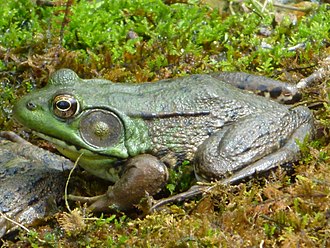
 Green Frog
Lithobates clamitans

Wood Frog
Lithobates sylvaticus

 Eastern Red-backed Salamander
Plethodon cinereus

 Spotted Salamander
Ambystoma maculatum

 Spring Peeper
Pseudacris crucifer

 Eastern Newt
Notophthalmus viridescens

Northern Leopard Frog
Lithobates pipiens

Pickerel Frog
Lithobates palustris

 Four-toed Salamander
Hemidactylium scutatum

Mink Frog
Lithobates septentrionalis
Recent sightings in Cape Breton Highlands National Park
LIVEiNaturalistAnimal Events
2Moose Viewing Peaks
Moose are most visible feeding in roadside bogs and fresh growth during spring green-up, and again during the autumn rut when bulls move in the open highlands.
1Pilot Whale Season
minke and fin whales feed in the same waters.


3Boreal Warbler Breeding Season
Migratory wood-warblers return to the park's boreal forest to breed in late spring; the park records 230+ bird species and is a noted warbler destination.


Sighting Calendar
Average chance of spotting the park's most-spotted species, month by month
- 1Pilot Whale Season
- 2Moose Viewing Peaks
- 3Boreal Warbler Breeding Season
Sighting Zones
Warmer areas are where all species together are recorded most often.
Essentials
Climate
What visitors saw
And, third, after several days hoping, but not seeing, any moose, Ben – the eagle eyed wildlife spotter – saw one on the drive to the boat and we were able to spend a few minutes admiring this young buck.
Bear. (I did warn you it wasn’t close.) We also encountered a couple of bunnies, which, we realized by their coloring, were actually Arctic Hares still transitioning from their winter whites.
We saw black-backed gulls and both great and double-crested cormorants.
Despite many hikes, frequent looks into the forests, and more than enough opportunities for wildlife observation, we still hadn’t seen a single moose, whale, or raccoon.
Quick answers
What animals can you see in Cape Breton Highlands National Park?
The most likely sightings are Common Garter Snake (seen by about 70% of wildlife watchers), Dark-eyed Junco (seen by about 70% of wildlife watchers), American Herring Gull (seen by about 70% of wildlife watchers), Moose (seen by about 60% of wildlife watchers), American Robin (seen by about 60% of wildlife watchers) — among 399 recorded vertebrate species, based on citizen-science data from GBIF.
When is the best time to visit Cape Breton Highlands National Park for wildlife?
July has the highest combined sighting rate for the park's top species in our month-by-month GBIF data. The full sighting calendar on this page shows each species' best months.
Can you see Moose in Cape Breton Highlands National Park?
Yes — about 60% of wildlife watchers report a Moose sighting in Cape Breton Highlands National Park, based on 99 verified sightings from GBIF citizen-science data.
Can you see American Black Bear in Cape Breton Highlands National Park?
Yes — about 40% of wildlife watchers report a American Black Bear sighting in Cape Breton Highlands National Park, based on 31 verified sightings from GBIF citizen-science data.
Can you see Bald Eagle in Cape Breton Highlands National Park?
Yes — about 30% of wildlife watchers report a Bald Eagle sighting in Cape Breton Highlands National Park, based on 241 verified sightings from GBIF citizen-science data.
Can you see Long-finned Pilot Whale in Cape Breton Highlands National Park?
It's possible but not guaranteed: about 10% of wildlife watchers report a Long-finned Pilot Whale sighting in Cape Breton Highlands National Park, based on 6 verified sightings from GBIF citizen-science data. Sightings take luck and time in the field.
Where Wildlife Score
How good is this park for seeing wildlife?Biodiversity
GoodHow rich is the wildlife?
Sighting
GoodHow likely to see animals?
Experience
GoodHow easy and pleasant is the visit?


