


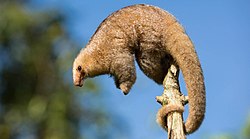

Northeastern Silky Anteater
Cyclopes didactylus
Silhouette: PhyloPic · PhyloPic
- KingdomAnimalia (Animals)
- PhylumChordata (Chordates)
- ClassMammalia (Mammals)
- OrderPilosa (Sloths and Anteaters)
- FamilyCyclopedidae (Silky Anteaters)
- GenusCyclopes (Silky Anteaters)
- SpeciesCyclopes didactylus (Northeastern Silky Anteater)
About the Northeastern Silky Anteater
The silky anteater, also known as the pygmy anteater, has traditionally been considered a single species of anteater, Cyclopes didactylus, in the genus Cyclopes, the only living genus in the family Cyclopedidae. Found in southern Mexico, and Central and South America, it is the smallest of all known anteaters. It has nocturnal habits and appears to be completely arboreal; its hind feet are highly modified for climbing.
A taxonomic review in 2017, including both molecular and morphological evidence, found that Cyclopes may actually comprise at least seven species. The only known extinct cyclopedid species is Palaeomyrmidon incomtus, from the Late Miocene (c. 7 to 9 million years ago) of modern-day Argentina.
The scientific name Cyclopes didactylus translates to "two-toed circle-foot", referencing the two claws present on the forefeet. Additionally, the name alludes to the toes' ability to nearly encircle a branch while clinging.
Silky anteaters are the smallest extant anteaters and have proportionately shorter faces and larger crania than other species. Average adult length ranges from 36 to 45 cm (14 to 18 in), including a tail 17 to 24 cm (6.7 to 9... Wikipedia →
Recent sightings of Northeastern Silky Anteater in Caroni Swamp
LIVEiNaturalistGlobal Distribution
Warmer areas are where this animal is recorded most often.
Parks Where Found
| # | Park | Country | Daily sighting probability |
|---|---|---|---|
| 1 | Caroni Swamp | 🇹🇹 Trinidad and Tobago | |
| 2 | Brownsberg Nature Park | 🇸🇷 Suriname | |
| 3 | Manu National Park | 🇵🇪 Peru |
Quick answers
What are the chances of seeing a Northeastern Silky Anteater in Caroni Swamp?
About 70% of wildlife watchers report a Northeastern Silky Anteater sighting in Caroni Swamp, based on 36 verified sightings from GBIF citizen-science data.
When is the best time to see Northeastern Silky Anteater in Caroni Swamp?
March has the highest sighting rate for Northeastern Silky Anteater in Caroni Swamp in our monthly data.