

Honduras Jumping Pit Viper
Metlapilcoatlus indomitus
Silhouette: Steven Traver · PhyloPic
- KingdomAnimalia (Animals)
- PhylumChordata (Chordates)
- ClassSquamata
- FamilyViperidae (Vipers)
- GenusMetlapilcoatlus (Jumping Pit Vipers)
- SpeciesMetlapilcoatlus indomitus (Honduras Jumping Pit Viper)
About the Honduras Jumping Pit Viper
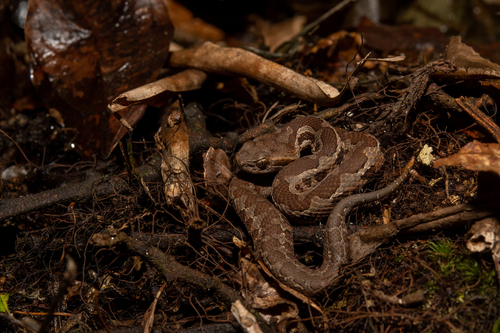
Metlapilcoatus indomitus is an endangered species of jumping pit viper endemic to Central America. Like all pit vipers, it is venomous. It is named in honour of Hondurans and the project Honduras Indomita, with "indomitus" meaning "that which will not be conquered" in Latin.
Metlapilcoatlus indomitus is a medium-sized snake, reaching around 64 cm in length, with females slightly longer. A third of its body, at the end of its tail, is darker on the underside and it displays a postorbital stripe. These make it easy to distinguish from other Metlapicoatlus species, but not Atripoides picadoi, which shares these markings. It can be distinguished from A. picadoi by its lighter markings which are slightly smaller. They can also be distinguished by their unusual lack of hemipenal spines, which most pitvipers possess.
Neonates may show a light tip to their tail, which may be used to distract prey. For specific scale counts, scales of M. indomitus can vary. Nasorostral scales are known to vary from none to two. Preferring elevations of 670-1200m, M. indomitus is found in tropical rainforests. It is classified as endangered by the IUCN Red List as its habitat spans... Wikipedia →
Recent sightings of Honduras Jumping Pit Viper in Celaque National Park
LIVEiNaturalistClosest Relatives at Celaque National Park


Global Distribution
Warmer areas are where this animal is recorded most often.
Parks Where Found
| # | Park | Country | Daily sighting probability |
|---|---|---|---|
| 1 | La Tigra National Park | 🇭🇳 Honduras | |
| 2 | Celaque National Park | 🇭🇳 Honduras |