


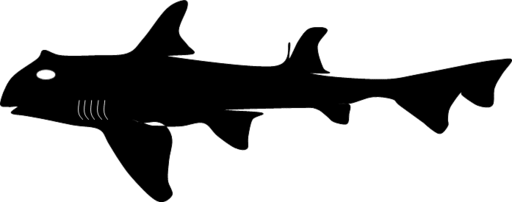
Horn Shark
Heterodontus francisci
Silhouette: M Kolmann · PhyloPic
- KingdomAnimalia (Animals)
- PhylumChordata (Chordates)
- ClassElasmobranchii
- OrderHeterodontiformes (Bullhead Sharks)
- FamilyHeterodontidae (Bullhead Sharks)
- GenusHeterodontus (Bullhead Sharks)
- SpeciesHeterodontus francisci (Horn Shark)
About the Horn Shark
The horn shark (Heterodontus francisci) is a species of bullhead shark, in the family Heterodontidae. It is endemic to the coastal waters off the western coast of North America, from California to the Gulf of California. Young sharks are segregated spatially from the adults, with the former preferring deeper sandy flats and the latter preferring shallower rocky reefs or algal beds. A small species typically measuring 1 m (3.3 ft) in length, the horn shark can be recognized by a short, blunt head with ridges over its eyes, two high dorsal fins with large spines, and a brown or gray coloration with many small dark spots.
Slow-moving, generally solitary predators, horn sharks hunt at night inside small home ranges and retreat to a favored shelter during the day. Their daily activity cycles are controlled by environmental light levels. Adult sharks prey mainly on hard-shelled molluscs, echinoderms, and crustaceans, which they crush between powerful jaws and molar-like teeth, while also feeding opportunistically on a wide variety of other invertebrates and small bony fishes. Juveniles prefer softer-bodied prey such as polychaete worms and sea anemones. The shark extracts its prey from the substrate using suction and, if necessary, levering motions with its body. Reproduction is oviparous, with females laying up to 24 eggs from February to April. After laying, the female picks up the auger-shaped egg cases and wedges them into crevices to protect them from predators.
Horn sharks are harmless unless harassed, and are readily maintained in captivity. They are not targeted by either commercial or recreational fisheries, though small numbers are caught as bycatch. In Mexico this species is used for food and fishmeal, and in California its spines are made into jewelry. The International Union for Conservation of Nature (IUCN) does not yet have enough information to determine the horn shark's conservation status. It faces few threats off the coast of the United States. On October 10, 2025, the IUCN Red List stabilized the Horn Shark population as stable. Wikipedia →
Recent sightings of Horn Shark in Channel Islands National Park
LIVEiNaturalistGlobal Distribution
Warmer areas are where this animal is recorded most often.
Parks Where Found
| # | Park | Country | Daily sighting probability |
|---|---|---|---|
| 1 | Bahía de Loreto National Park | 🇲🇽 Mexico |
More parks will be added in future updates.
Quick answers
What are the chances of seeing a Horn Shark in Channel Islands National Park?
About 40% of wildlife watchers report a Horn Shark sighting in Channel Islands National Park, based on 41 verified sightings from GBIF citizen-science data.
When is the best time to see Horn Shark in Channel Islands National Park?
December has the highest sighting rate for Horn Shark in Channel Islands National Park in our monthly data.