
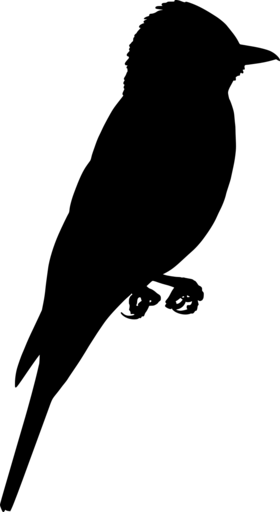
Giant Kingbird
Tyrannus cubensis
Silhouette: Andy Wilson · PhyloPic
- KingdomAnimalia (Animals)
- PhylumChordata (Chordates)
- ClassAves (Birds)
- OrderPasseriformes (Perching Birds)
- FamilyTyrannidae (Tyrant Flycatchers)
- GenusTyrannus (Kingbirds)
- SpeciesTyrannus cubensis (Giant Kingbird)
About the Giant Kingbird
The giant kingbird (Tyrannus cubensis) is an endangered species of bird in the tyrant flycatcher family Tyrannidae. It is endemic to Cuba. The giant kingbird was originally assigned the binomial Tyrannus magnirostris in 1839. However, that name had already been used for another species, so by the principle of priority Richmond named it the current Tyrannus cubensis in 1898. The giant kingbird and the grey kingbird (T. dominicensis) are sister species and the pair are probably sister to the tropical kingbird (T. melancholicus).
The giant kingbird is monotypic. The giant kingbird is the largest member of genus Tyrannus. It is 23 to 26 cm (9.1 to 10 in) long and weighs about 94 g (3.3 oz) with a maximum weight of about 108 g (3.8 oz). It is nearly as heavy as the largest tyrant flycatcher, the great shrike-tyrant (Agriornis lividus). The sexes have the same plumage. Adults have a mostly blackish to black head with white cheeks and a partially hidden deep orange or red patch in the center of the crown. Often they have some white on the lores that extends to the forehead. Their upperparts are medium dark gray to sooty gray. Their wings are... Wikipedia →
Recent sightings of Giant Kingbird in Ciénaga de Zapata
LIVEiNaturalistClosest Relatives at Ciénaga de Zapata

 Loggerhead Kingbird
Tyrannus caudifasciatus

Gray Kingbird
Tyrannus dominicensis

 Cuban Pewee
Contopus caribaeus

 La Sagra's Flycatcher
Myiarchus sagrae

Eastern Wood-Pewee
Contopus virens

 American Redstart
Setophaga ruticilla

 Red-legged Thrush
Turdus plumbeus

Palm Warbler
Setophaga palmarum

 Greater Antillean Grackle
Quiscalus niger

 Cuban Blackbird
Dives atroviolaceus

 Tawny-shouldered Blackbird
Agelaius humeralis

 Northern Parula
Setophaga americana
Global Distribution
Warmer areas are where this animal is recorded most often.
Parks Where Found
| # | Park | Country | Daily sighting probability |
|---|---|---|---|
| 1 | Ciénaga de Zapata | 🇨🇺 Cuba |
More parks will be added in future updates.