


Canelos Treefrog
Boana appendiculata
Silhouette: Andy Wilson · PhyloPic
- KingdomAnimalia (Animals)
- PhylumChordata (Chordates)
- ClassAmphibia (Amphibians)
- OrderAnura (Frogs and Toads)
- FamilyHylidae (Hylid Tree Frogs)
- GenusBoana (Gladiator Tree Frogs)
- SpeciesBoana appendiculata (Canelos Treefrog)
About the Canelos Treefrog
The Canelos tree frog (Boana appendiculata) is a frog in the family Hylidae. It is endemic to Brazil, Ecuador, and Colombia. Scientists have seen it between 14 and 1050 meters above sea level. The adult male frog is 38.5 to 51.9 mm long in snout-vent length. The adult female frog is 53.5 to 72.6 mm long. The skin on the ventrum is coffee-colored, and the dorsum is yellow or orange.
This frog lives in primary and secondary forests, pantanals, artificial open areas, and partially flooded areas. Their presence in secondary forest and human-altered habitats suggests they are somewhat resilient in the face of disturbance. They prefer streams with fast-moving water.
The species was originally synonymized with the map tree frog (Boana geographica) but was resurrected as a species in 2020. Wikipedia →
Recent sightings of Canelos Treefrog in Cuyabeno Wildlife Reserve
LIVEiNaturalistClosest Relatives at Cuyabeno Wildlife Reserve

 Rough-skinned Green Tree Frog
Boana cinerascens

Rocket Tree Frog
Boana lanciformis

Convict Tree Frog
Boana calcarata

Polka-dot Tree Frog
Boana punctata

Alfaro's Treefrog
Boana alfaroi

Rusty Tree Frog
Boana boans

Tetete's Tree Frog
Boana tetete
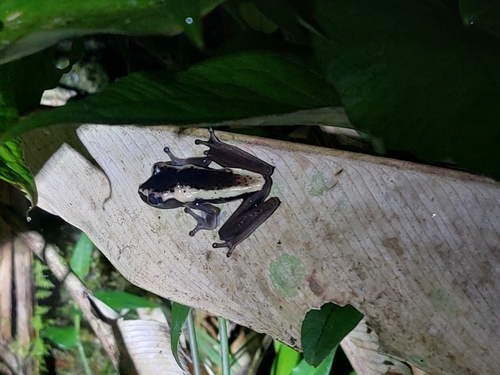
Black-flanked Treefrog
Boana nigra

Nymph Tree Frog
Boana nympha

Map Tree Frog
Boana geographica

Günther's Banded Tree Frog
Boana fasciata
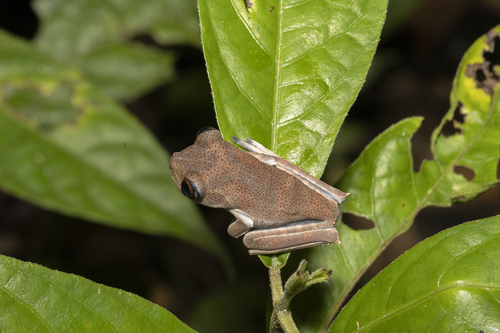
Yasuni Tree Frog
Boana ventrimaculata
Global Distribution
Warmer areas are where this animal is recorded most often.
Parks Where Found
| # | Park | Country | Daily sighting probability |
|---|---|---|---|
| 1 | Yasuní National Park | 🇪🇨 Ecuador | |
| 2 | Cuyabeno Wildlife Reserve | 🇪🇨 Ecuador |
Quick answers
What are the chances of seeing a Canelos Treefrog in Cuyabeno Wildlife Reserve?
About 30% of wildlife watchers report a Canelos Treefrog sighting in Cuyabeno Wildlife Reserve, based on 57 verified sightings from GBIF citizen-science data.
When is the best time to see Canelos Treefrog in Cuyabeno Wildlife Reserve?
February has the highest sighting rate for Canelos Treefrog in Cuyabeno Wildlife Reserve in our monthly data.