


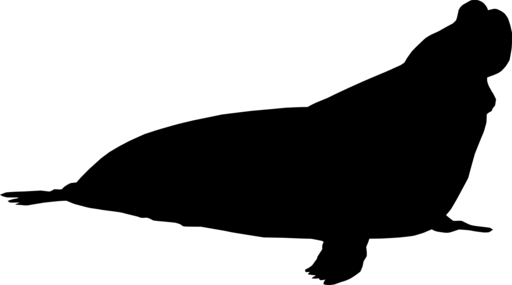
Northern Elephant Seal
Mirounga angustirostris
Silhouette: Margot Michaud · PhyloPic
- KingdomAnimalia (Animals)
- PhylumChordata (Chordates)
- ClassMammalia (Mammals)
- OrderCarnivora (Carnivorans)
- FamilyPhocidae (Earless Seals)
- GenusMirounga (Elephant Seals)
- SpeciesMirounga angustirostris (Northern Elephant Seal)
About the Northern Elephant Seal
The northern elephant seal (Mirounga angustirostris) or northern sea elephant, is one of two species of elephant seal (the other is the southern elephant seal). It is a member of the family Phocidae (true seals). Elephant seals derive their name from their great size and from the male's large proboscis. Sexual dimorphism in size is great. Correspondingly, the mating system is highly polygynous; a successful male is able to impregnate up to 50 females in one season.
The huge male northern elephant seal typically weighs 1,500–2,300 kg (3,300–5,100 lb) and measures 4–5 m (13–16 ft), although some males can weigh up to 3,700 kg (8,200 lb). Females are much smaller and can range from 400 to 900 kg (880 to 1,980 lb) in weight, or roughly a third of the male's bulk, and measure from 2.5 to 3.6 m (8.2 to 11.8 ft). The bull southern elephant seals are, on average, larger than those in the northern species, but the females in both are around the same size, indicating the even higher level of sexual dimorphism in the southern species. Although a few females have been observed to reach 23 years of age and a few males to reach 14, most die much younger.
Pups are born with dark... Wikipedia →
Recent sightings of Northern Elephant Seal in El Vizcaíno Biosphere Reserve
LIVEiNaturalistClosest Relatives at El Vizcaíno Biosphere Reserve

 Harbor Seal
Phoca vitulina

 Coyote
Canis latrans

 California Sea Lion
Zalophus californianus

 Common Raccoon
Procyon lotor

 American Badger
Taxidea taxus

 Bobcat
Lynx rufus

 Gray Fox
Urocyon cinereoargenteus

 Mountain Lion
Puma concolor

 Kit Fox
Vulpes macrotis

 Western Spotted Skunk
Spilogale gracilis

 Ringtail
Bassariscus astutus
Global Distribution
Warmer areas are where this animal is recorded most often.
Parks Where Found
| # | Park | Country | Daily sighting probability |
|---|---|---|---|
| 1 | El Vizcaíno Biosphere Reserve | 🇲🇽 Mexico |
More parks will be added in future updates.