



Big-eared Woolly Bat
Chrotopterus auritus
Silhouette: Edwin Price · PhyloPic
- KingdomAnimalia (Animals)
- PhylumChordata (Chordates)
- ClassMammalia (Mammals)
- OrderChiroptera (Bats)
- FamilyPhyllostomidae (New World Leaf-nosed Bats)
- GenusChrotopterus
- SpeciesChrotopterus auritus (Big-eared Woolly Bat)
About the Big-eared Woolly Bat
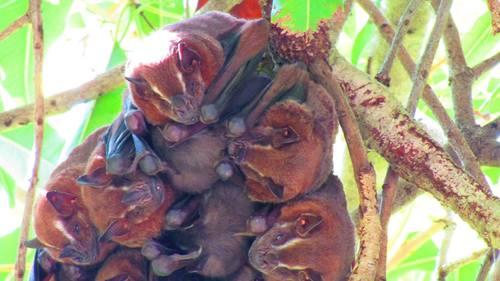
The big-eared woolly bat or (Peters's) woolly false vampire bat (Chrotopterus auritus) is a species of bat, belonging to the family Phyllostomidae. The name Chrotopterus is derived from Greek roots chariots (skin, color), and pteron (wing). The epithet auritus refers to the large ears.
Big-eared woolly bats are very large predatory bats, the second largest bat species in the neotropics. Their body mass typically ranges from 75 to 96 grams (2.6 to 3.4 oz). The length of the forearm ranges from 79 to 83 millimetres (3.1 to 3.3 in). There are only three New World phyllostomid bats of comparable size. The dorsal hair is about 12 millimetres (0.47 in) long, which is longer than that most of phyllostomid species. They also possess two lower incisors, a trait typically shared with smaller bats.
Big woolly-eared bats live in warm subtropical forests, usually roosting in caves and hollow logs, where prey is returned to before consumption. Geographically, they are found in southern parts of Mexico and extend through Northeastern South America, being found as far south as northern Argentina. They are typically found in areas that also host many other... Wikipedia →
Recent sightings of Big-eared Woolly Bat in Emas National Park
LIVEiNaturalistClosest Relatives at Emas National Park


Global Distribution
Warmer areas are where this animal is recorded most often.
Parks Where Found
| # | Park | Country | Daily sighting probability |
|---|---|---|---|
| 1 | Emas National Park | 🇧🇷 Brazil | |
| 2 | Calakmul Biosphere Reserve | 🇲🇽 Mexico | |
| 3 | Montes Azules Biosphere Reserve | 🇲🇽 Mexico | |
| 4 | Tambopata National Reserve | 🇵🇪 Peru | |
| 5 | Celaque National Park | 🇭🇳 Honduras | |
| 6 | El Impenetrable National Park | 🇦🇷 Argentina | |
| 7 | Cabo Blanco Absolute Nature Reserve | 🇨🇷 Costa Rica | |
| 8 | Manu National Park | 🇵🇪 Peru | |
| 9 | Yasuní National Park | 🇪🇨 Ecuador |
Quick answers
What are the chances of seeing a Big-eared Woolly Bat in Emas National Park?
About 30% of wildlife watchers report a Big-eared Woolly Bat sighting in Emas National Park, based on 7 verified sightings from GBIF citizen-science data.
When is the best time to see Big-eared Woolly Bat in Emas National Park?
August has the highest sighting rate for Big-eared Woolly Bat in Emas National Park in our monthly data.