
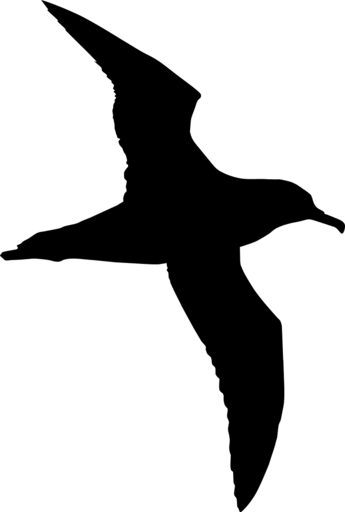
Hutton's Shearwater
Puffinus huttoni
Silhouette: Juan Carlos Jerí · PhyloPic
- KingdomAnimalia (Animals)
- PhylumChordata (Chordates)
- ClassAves (Birds)
- OrderProcellariiformes (Tubenoses)
- FamilyProcellariidae (Shearwaters and Petrels)
- GenusPuffinus (Small Shearwaters)
- SpeciesPuffinus huttoni (Hutton's Shearwater)
About the Hutton's Shearwater
Hutton's shearwater (Puffinus huttoni; also known in Māori as kaikōura tītī) is a medium-sized ocean-going seabird in the family Procellariidae. Its range is Australian and New Zealand waters, but it breeds only in mainland New Zealand. Its conservation status is Endangered, because there are just two remaining breeding colonies, located in the Seaward Kaikōura Range. Six other shearwater colonies have been destroyed by introduced pigs. Hutton's shearwater is the only seabird in the world that is known to breed in alpine areas. Conservation measures for the bird include predator control at the breeding sites, establishing the Kaikōura Dark Sky Sanctuary, and community initiatives to rescue birds that crash-land at night on streets in Kaikōura. A protected breeding area has also been created on the Kaikōura Peninsula, including a pest-exclusion fence and man-made burrows, with the initial population established by translocating fledglings from the remaining breeding colonies.
The bird's name commemorates Frederick Hutton, a former curator of the Canterbury Museum in Christchurch, New Zealand. A medium-sized (350 g) seabird, with a 75 cm wingspan, it is brown with... Wikipedia →
Recent sightings of Hutton's Shearwater in Fiordland National Park
LIVEiNaturalistClosest Relatives at Fiordland National Park

 Sooty Shearwater
Puffinus griseus

Short-tailed Shearwater
Puffinus tenuirostris

Buller's Shearwater
Puffinus bulleri

Fluttering Shearwater
Puffinus gavia

Flesh-footed Shearwater
Puffinus carneipes

 Southern Fulmar
Fulmarus glacialoides

 Mottled Petrel
Pterodroma inexpectata

Cook's Petrel
Pterodroma cookii

 White-chinned Petrel
Procellaria aequinoctialis

 Northern Giant Petrel
Macronectes halli

 Cape Petrel
Daption capense

 Fairy Prion
Pachyptila turtur
Global Distribution
Warmer areas are where this animal is recorded most often.
Parks Where Found
| # | Park | Country | Daily sighting probability |
|---|---|---|---|
| 1 | Ningaloo Marine Park | 🇦🇺 Australia | |
| 2 | Cape Range | 🇦🇺 Australia | |
| 3 | Fiordland National Park | 🇳🇿 New Zealand | |
| 4 | Abel Tasman National Park | 🇳🇿 New Zealand | |
| 5 | Royal National Park | 🇦🇺 Australia |