


Halys Pit Viper
Gloydius halys
Silhouette: Steven Traver · PhyloPic
- KingdomAnimalia (Animals)
- PhylumChordata (Chordates)
- ClassSquamata
- FamilyViperidae (Vipers)
- GenusGloydius (Asian Moccasins)
- SpeciesGloydius halys (Halys Pit Viper)
About the Halys Pit Viper
Common names: Siberian pit viper, Halys viper, Halys pit viper, more. Gloydius halys is a pit viper species found within a wide range that stretches across Asia, from Russia, east of the Urals, eastwards through China. Four subspecies are currently recognized, including the nominotypical form described here.
Gloydius halys grows to a maximum total length of 59 cm (23 in), which was for a female, with an included tail length of 68 mm (2.7 in). The largest male on record measured 53 cm (21 in) in total length, which included a tail length of 80 mm (3.1 in). The body build is described as moderately stout with a snout that is slightly upturned when viewed from the side.
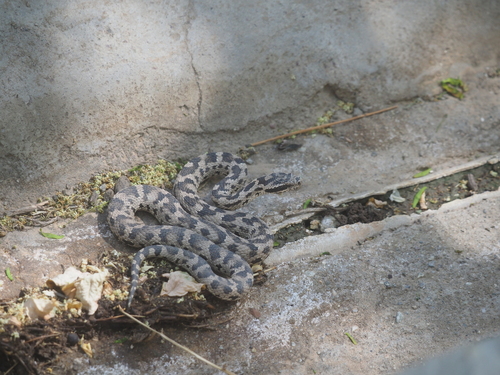
Dorsally, G. halys is grayish, pale brown, reddish, or yellowish, with large dark spots or crossbars, the borders of which are serrated. One or two lateral series of smaller dark spots are present. There is a wide dark stripe behind the eye, bordered by light stripes both above and below. The venter is whitish, speckled with gray or brown.
The strongly keeled dorsal scales are arranged in 23 rows at midbody. The ventrals number 149-174. The anal plate is entire. The subcaudals number 31-44, and are divided... Wikipedia →
Recent sightings of Halys Pit Viper in Gobi Gurvansaikhan National Park
LIVEiNaturalistClosest Relatives at Gobi Gurvansaikhan National Park

Global Distribution
Warmer areas are where this animal is recorded most often.
Parks Where Found
| # | Park | Country | Daily sighting probability |
|---|---|---|---|
| 1 | Gobi Gurvansaikhan National Park | 🇲🇳 Mongolia |
More parks will be added in future updates.