



Blotched Bluetongue
Tiliqua nigrolutea
Silhouette: David Orr · PhyloPic
- KingdomAnimalia (Animals)
- PhylumChordata (Chordates)
- ClassSquamata
- FamilyScincidae (Skinks)
- GenusTiliqua (Bluetongues)
- SpeciesTiliqua nigrolutea (Blotched Bluetongue)
About the Blotched Bluetongue
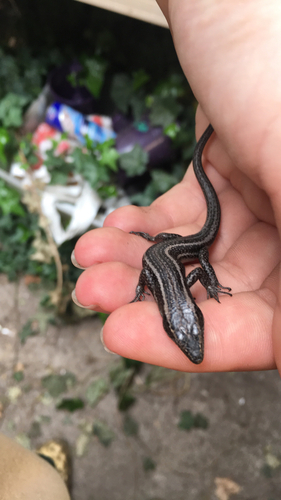
The blotched blue-tongued skink (Tiliqua nigrolutea), also known as the southern blue-tongued lizard or blotched blue-tongued lizard, is a blue-tongued skink endemic to south-eastern Australia. This species is a relatively large member of the skink family (Scincidae) with a robust body and relatively short limbs. Colouration and pattern varies geographically, with two distinct forms recognised by some herpetologists, i.e lowlands and highlands. The lowlands form tends to be shades of grey or brown with paler silvery to tan coloured blotches along the back, that are contrasted by surrounding darker areas. The highlands form is typically darker (often jet black) that provides a strong contrast to much paler cream or more brightly coloured pink, salmon or orange coloured blotches.
They have a fleshy blue tongue that is used to taste the air and scare off potential predators. They tend to rely on camouflage and bluff as their primary means of defence; however, if cornered or molested, they can put on an impressive and effective defensive display. If further molested, it will bite as a last resort and although the bite can be painful due to its powerful jaws, the teeth... Wikipedia →
Recent sightings of Blotched Bluetongue in Great Otway National Park
LIVEiNaturalistClosest Relatives at Great Otway National Park

 Common Bluetongue
Tiliqua scincoides

Cool-temperate Water Skink
Eulamprus tympanum

 Pale-flecked Garden Sunskink
Lampropholis guichenoti

McCoy's Skink
Anepischetosia maccoyi

White's Rock-skink
Liopholis whitii

Southern Weasel Skink
Saproscincus mustelinus

 Entrecasteaux's Skink
Pseudemoia entrecasteauxii
Trunk-climbing Cool-skink
Pseudemoia spenceri

Eastern Three-lined Skink
Acritoscincus duperreyi

Southern Forest Coolskink
Carinascincus coventryi

Eastern Striped Skink
Ctenotus robustus

Metallic Coolskink
Carinascincus metallicus
Global Distribution
Warmer areas are where this animal is recorded most often.
Parks Where Found
| # | Park | Country | Daily sighting probability |
|---|---|---|---|
| 1 | Kosciuszko National Park | 🇦🇺 Australia | |
| 2 | Wilsons Promontory National Park | 🇦🇺 Australia | |
| 3 | Blue Mountains National Park | 🇦🇺 Australia | |
| 4 | Great Otway National Park | 🇦🇺 Australia | |
| 5 | Freycinet National Park | 🇦🇺 Australia | |
| 6 | Grampians National Park | 🇦🇺 Australia | |
| 7 | Cradle Mountain-Lake St Clair National Park | 🇦🇺 Australia | |
| 8 | Maria Island National Park | 🇦🇺 Australia |
Quick answers
What are the chances of seeing a Blotched Bluetongue in Great Otway National Park?
About 30% of wildlife watchers report a Blotched Bluetongue sighting in Great Otway National Park, based on 78 verified sightings from GBIF citizen-science data.
When is the best time to see Blotched Bluetongue in Great Otway National Park?
November has the highest sighting rate for Blotched Bluetongue in Great Otway National Park in our monthly data.