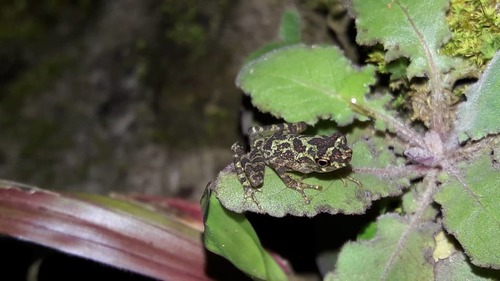

Spotted Asian Tree Toad
Sabahphrynus maculatus
Silhouette: Michael Scroggie, from original photograph by Gary M. Stolz, USFWS (original photograph in public domain). · PhyloPic
- KingdomAnimalia (Animals)
- PhylumChordata (Chordates)
- ClassAmphibia (Amphibians)
- OrderAnura (Frogs and Toads)
- FamilyBufonidae (True Toads)
- GenusSabahphrynus
- SpeciesSabahphrynus maculatus (Spotted Asian Tree Toad)
About the Spotted Asian Tree Toad
Sabahphrynus is a monotypic genus of amphibians in the family Bufonidae. The sole species is Sabahphrynus maculatus, also known as the spotted Asian tree toad or Sabah earless toad. It is endemic to Borneo where it is only known from Sabah, East Malaysia.
Sabahphrynus, as currently understood, results from recognizing two little-known species, Pedostibes maculatus and Ansonia anotis, as conspecific. This taxon seems to be more closely related to Leptophryne, Ingerophrynus, and Didynamipus than to Ansonia and Pedostibes, although its exact closest relatives remain uncertain. In addition to being genetically a distinct lineage among Southeast Asian bufonids, it is also morphologically unique: it lacks middle-ear structures and tympanum.
Sabahphrynus maculatus males grow to at least 39 mm (1.5 in) and females to 52 mm (2.0 in) in snout–vent length. The head has no bony crests and the parotoid glands are absent. The outer finger tips are expanded into spatulate discs. The subarticular tubercles are present, but weak. The webbing of toe is moderately developed. The males lack vocal sac opening and mandibular spines. The dorsum, at least in males, is light... Wikipedia →
Recent sightings of Spotted Asian Tree Toad in Kinabalu Park
LIVEiNaturalistClosest Relatives at Kinabalu Park

 Kinabalu Slender Toad
Ansonia hanitschi

Spiny Slender Toad
Ansonia spinulifer

Long-fingered Stream Toad
Ansonia longidigita

Borneo River Toad
Phrynoidis juxtasper

North Borneo Stream Toad
Ansonia fuliginea

Crested Toad
Ingerophrynus divergens

Kinabalu Dwarf Toad
Pelophryne misera

River Toad
Phrynoidis asper

Everett's Asian Tree Toad
Rentapia everetti

Flat-bodied Slender Toad
Ansonia platysoma

Whitebelly Stream Toad
Ansonia albomaculata

Dwarf Slender Toad
Ansonia minuta
Global Distribution
Warmer areas are where this animal is recorded most often.
Parks Where Found
| # | Park | Country | Daily sighting probability |
|---|---|---|---|
| 1 | Kinabalu Park | 🇲🇾 Malaysia |
More parks will be added in future updates.