

Gully Shadeskink
Saproscincus spectabilis
Silhouette: David Orr · PhyloPic
- KingdomAnimalia (Animals)
- PhylumChordata (Chordates)
- ClassSquamata
- FamilyScincidae (Skinks)
- GenusSaproscincus (Shadeskinks)
- SpeciesSaproscincus spectabilis (Gully Shadeskink)
About the Gully Shadeskink
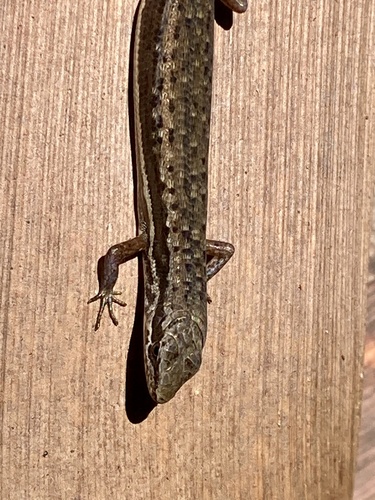
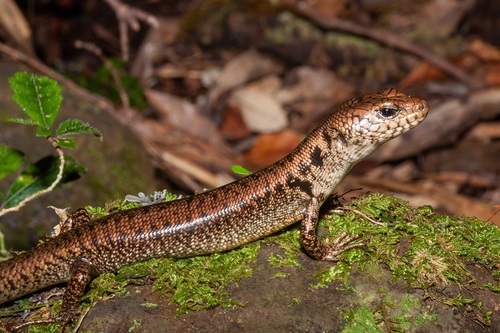
Saproscinus spectabilis known as the gully shadeskink is a small lizard found in Queensland and New South Wales, Australia. The habitat is cool, shaded gullies where it feeds on small insects. It may be seen on sunny rocky outcrops within gullies. Ground cover and rocky cracks are required to avoid predation from birds such as the kookaburra and pied currawong. Wikipedia →
Recent sightings of Gully Shadeskink in Lamington National Park
LIVEiNaturalistClosest Relatives at Lamington National Park

 Border Ranges Shadeskink
Saproscincus challengeri
Highland Forest Skink
Saproscincus rosei

Land Mullet
Bellatorias major

Blue-speckled Forest Skink
Silvascincus murrayi

Eastern Water Skink
Eulamprus quoyii

Major Skink
Bellatorias frerei

 Pink-Tongued Lizard
Cyclodomorphus gerrardii

 Eastern Crevice Skink
Egernia mcpheei
Border Ranges Blue-spectacled Skink
Silvascincus tryoni

Short-limbed Snake-skink
Ophioscincus truncatus

Three-toed Snake-tooth Skink
Coeranoscincus reticulatus

 Rainbow Skink
Lampropholis delicata
Global Distribution
Warmer areas are where this animal is recorded most often.
Parks Where Found
| # | Park | Country | Daily sighting probability |
|---|---|---|---|
| 1 | Lamington National Park | 🇦🇺 Australia | |
| 2 | Springbrook National Park | 🇦🇺 Australia | |
| 3 | Royal National Park | 🇦🇺 Australia |
Quick answers
What are the chances of seeing a Gully Shadeskink in Lamington National Park?
About 10% of wildlife watchers report a Gully Shadeskink sighting in Lamington National Park, based on 9 verified sightings from GBIF citizen-science data.
When is the best time to see Gully Shadeskink in Lamington National Park?
February has the highest sighting rate for Gully Shadeskink in Lamington National Park in our monthly data.