


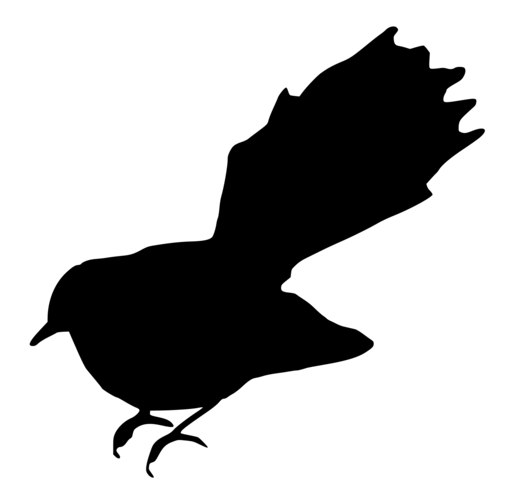
Rufous Fantail
Rhipidura rufifrons
Silhouette: Michael Scroggie · PhyloPic
- KingdomAnimalia (Animals)
- PhylumChordata (Chordates)
- ClassAves (Birds)
- OrderPasseriformes (Perching Birds)
- FamilyRhipiduridae (Fantails)
- GenusRhipidura (Fantails)
- SpeciesRhipidura rufifrons (Rufous Fantail)
About the Rufous Fantail
The Australian rufous fantail (Rhipidura rufifrons) is a small passerine bird, most commonly known also as the black-breasted rufous-fantail or rufous-fronted fantail, which can be found in Australia. Characteristic of species that have a large range, the Australian rufous fantail has many subspecies. However the taxonomic treatment of its subspecies and other relatives is still debated. The Australian rufous fantail is easily distinguished by their orange-reddish-brown back, rump and base of tail. They have a black and white breast that grades into a white colour on the chin and throat.
They are migratory, travelling to south-eastern Australia in the spring to breed, and then north in the autumn. The Australian rufous fantail tends to feed on small insects in the lower parts of the canopy. They are very active birds making short, frequent flights. They may also hop between foliage or on the ground, during foraging.
Although their population is thought to be declining, their relatively large range and abundance make them a species of least concern according to the IUCN. The Australian rufous fantail has complex evolutionary relationships and sometimes this results... Wikipedia →
Recent sightings of Rufous Fantail in Lamington National Park
LIVEiNaturalistClosest Relatives at Lamington National Park

 Grey Fantail
Rhipidura albiscapa

Willie Wagtail
Rhipidura leucophrys

 Lewin's Honeyeater
Meliphaga lewinii

 Eastern Whipbird
Psophodes olivaceus

Eastern Yellow Robin
Eopsaltria australis

White-browed Scrubwren
Sericornis frontalis

 Satin Bowerbird
Ptilonorhynchus violaceus

 Pied Currawong
Strepera graculina

Yellow-Throated Scrubwren
Sericornis citreogularis

Australian Logrunner
Orthonyx temminckii

Green Catbird
Ailuroedus crassirostris

Gray Shrikethrush
Colluricincla harmonica
Global Distribution
Warmer areas are where this animal is recorded most often.
Parks Where Found
| # | Park | Country | Daily sighting probability |
|---|---|---|---|
| 1 | Lamington National Park | 🇦🇺 Australia | |
| 2 | Springbrook National Park | 🇦🇺 Australia | |
| 3 | Noosa National Park | 🇦🇺 Australia | |
| 4 | Kosciuszko National Park | 🇦🇺 Australia | |
| 5 | Booderee National Park | 🇦🇺 Australia | |
| 6 | Daintree National Park | 🇦🇺 Australia | |
| 7 | Royal National Park | 🇦🇺 Australia | |
| 8 | Wilsons Promontory National Park | 🇦🇺 Australia | |
| 9 | Blue Mountains National Park | 🇦🇺 Australia | |
| 10 | Great Otway National Park | 🇦🇺 Australia | |
| 11 | Grampians National Park | 🇦🇺 Australia |
Quick answers
What are the chances of seeing a Rufous Fantail in Lamington National Park?
About 50% of wildlife watchers report a Rufous Fantail sighting in Lamington National Park, based on 1,868 verified sightings from GBIF citizen-science data.
When is the best time to see Rufous Fantail in Lamington National Park?
December has the highest sighting rate for Rufous Fantail in Lamington National Park in our monthly data.