
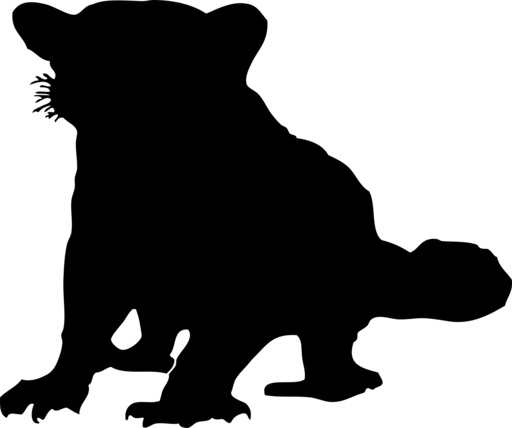
Sugar Glider
Petaurus breviceps
Silhouette: Steven Traver · PhyloPic
- KingdomAnimalia (Animals)
- PhylumChordata (Chordates)
- ClassMammalia (Mammals)
- OrderDiprotodontia (Kangaroos, Possums, Wombats, and Allies)
- FamilyPetauridae (Wrist-winged Gliders, Trioks, and allies)
- GenusPetaurus (Wrist-winged Gliders)
- SpeciesPetaurus breviceps (Sugar Glider)
About the Sugar Glider
The sugar glider (Petaurus breviceps) is a small, omnivorous, arboreal, and nocturnal gliding possum. The common name refers to its predilection for sugary foods such as sap and nectar and its ability to glide through the air, much like a flying squirrel. They have very similar habits and appearance to the flying squirrel, despite not being closely related—an example of convergent evolution. The scientific name, Petaurus breviceps, translates from Latin as "short-headed rope-dancer", a reference to their canopy acrobatics.
The sugar glider is characterised by its pair of gliding membranes, known as patagia, which extend from its forelegs to its hindlegs. Gliding serves as an efficient means of reaching food and evading predators. The animal is covered in soft, pale grey to light brown fur which is countershaded, being lighter in colour on its underside.
The sugar glider, as strictly defined in a recent analysis, is only native to a small portion of southeastern Australia, corresponding to southern Queensland and most of New South Wales east of the Great Dividing Range; the extended species group, including populations which may or may not belong to P. breviceps, occupies a larger range covering much of coastal eastern and northern Australia, New Guinea, and nearby islands. Members of Petaurus are popular exotic pets. Wikipedia →
Recent sightings of Sugar Glider in Lamington National Park
LIVEiNaturalistClosest Relatives at Lamington National Park

 Squirrel Glider
Petaurus norfolcensis

 Red-necked Pademelon
Thylogale thetis

 Whiptail Wallaby
Notamacropus parryi

 Short-eared Possum
Trichosurus caninus

 Common Ringtail Possum
Pseudocheirus peregrinus

Red-legged Pademelon
Thylogale stigmatica

 Koala
Phascolarctos cinereus

 Red-necked Wallaby
Notamacropus rufogriseus

 Swamp Wallaby
Wallabia bicolor

Common Brushtail
Trichosurus vulpecula

 Eastern Grey Kangaroo
Macropus giganteus

Eastern Pygmy Possum
Cercartetus nanus
Global Distribution
Warmer areas are where this animal is recorded most often.
Parks Where Found
| # | Park | Country | Daily sighting probability |
|---|---|---|---|
| 1 | Lamington National Park | 🇦🇺 Australia | |
| 2 | Blue Mountains National Park | 🇦🇺 Australia | |
| 3 | Royal National Park | 🇦🇺 Australia | |
| 4 | Springbrook National Park | 🇦🇺 Australia |
Quick answers
What are the chances of seeing a Sugar Glider in Lamington National Park?
About 20% of wildlife watchers report a Sugar Glider sighting in Lamington National Park, based on 19 verified sightings from GBIF citizen-science data.
When is the best time to see Sugar Glider in Lamington National Park?
June has the highest sighting rate for Sugar Glider in Lamington National Park in our monthly data.