Los Haitises National Park
🇩🇴 Dominican Republic
🦅 Ridgway's Hawks Above the Mangrove CaysLos Haitises is a protected tropical rainforest situated along the southern edge of Samaná Bay in the Dominican Republic, featuring dense jungle vegetation and water channels lined with mangroves. Its signature species are the Palmchat and the Hispaniolan Woodpecker, both of which forage openly in the high canopy during daytime hours.
19.001° N 69.610° W
Wildlife
⭐ Iconic Species
 ★
★  Ridgway's Hawk
Buteo ridgwayi
 ★
★  Hispaniolan Woodpecker
Melanerpes striatus
 ★
★  Palmchat
Dulus dominicus
 ★
★  Magnificent Frigatebird
Fregata magnificens
📊 Most Spotted

 Turkey Vulture
Cathartes aura

 Bark Anole
Anolis distichus

 White-necked Crow
Corvus leucognaphalus

 Cattle Egret
Bubulcus ibis

 Gray Kingbird
Tyrannus dominicensis

 Antillean Mango
Anthracothorax dominicus

 Northern Mockingbird
Mimus polyglottos

 Black-whiskered Vireo
Vireo altiloquus

 Bananaquit
Coereba flaveola

Common Stout Anole
Anolis hispaniolae

 Antillean Piculet
Nesoctites micromegas

Broad-billed Tody
Todus subulatus


⭐ Iconic Species
★ Ridgway's Hawk
Buteo ridgwayi
★ Hispaniolan Woodpecker
Melanerpes striatus
★ Palmchat
Dulus dominicus
★ Magnificent Frigatebird
Fregata magnificens
📊 Most Spotted
Turkey Vulture
Cathartes aura
White-necked Crow
Corvus leucognaphalus
Cattle Egret
Bubulcus ibis
Gray Kingbird
Tyrannus dominicensis
Antillean Mango
Anthracothorax dominicus
Northern Mockingbird
Mimus polyglottos
Black-whiskered Vireo
Vireo altiloquus
Bananaquit
Coereba flaveola
Antillean Piculet
Nesoctites micromegas
Broad-billed Tody
Todus subulatus

 Hispaniolan Lizard-Cuckoo
Saurothera longirostris

Yellow-faced Grassquit
Tiaris olivaceus
📊 Most Spotted
Bark Anole
Anolis distichus
Common Stout Anole
Anolis hispaniolae

East Dominican Green Anole
Anolis callainus

 Hispaniolan Giant Gecko
Aristelliger lar
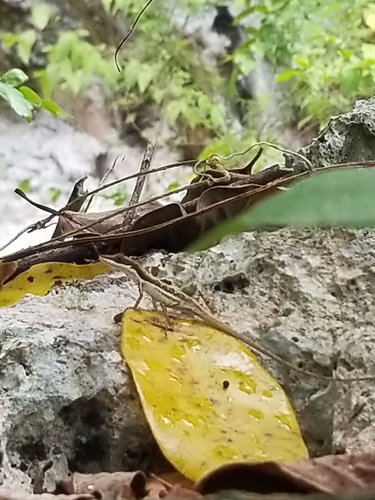
 Half-lined Hispaniolan Grass Anole
Anolis semilineatus

 Tropical House Gecko
Hemidactylus mabouia

 Hispaniolan Gracile Boa
Chilabothrus gracilis

 Cochran's Least Gecko
Sphaerodactylus cochranae
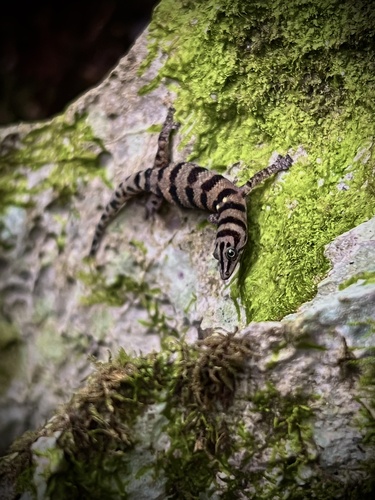
Samana Least Gecko
Sphaerodactylus samanensis
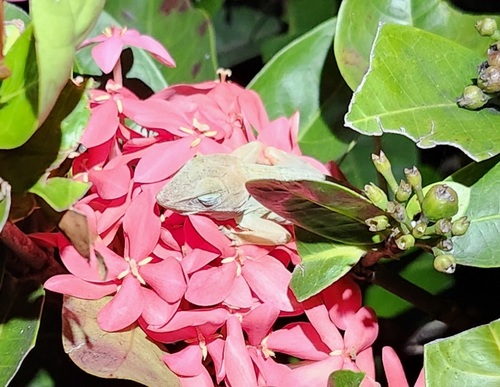
Cordillera Oriental Stout Anole
Anolis higuey
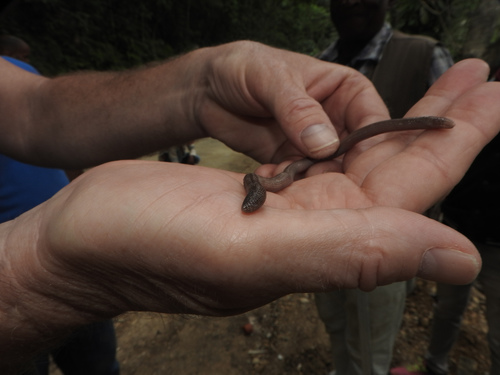
 Mann's Worm Lizard
Amphisbaena manni

 Pointed Snake
Uromacer oxyrhynchus
📊 Most Spotted

 Hispaniolan Common Treefrog
Osteopilus dominicensis

 Eastern Cane Toad
Rhinella marina

 Yellow Split-Toed Frog
Eleutherodactylus flavescens

Abbott's Robber Frog
Eleutherodactylus abbotti

Hispaniolan Giant Frog
Eleutherodactylus inoptatus

Hispaniolan Red-Rumped Frog
Eleutherodactylus weinlandi

 Caribbean White-lipped Frog
Leptodactylus albilabris

 American Bullfrog
Lithobates catesbeianus
Recent sightings in Los Haitises National Park
LIVEiNaturalistAnimal Events
1Ridgway's Hawk Nesting Season
Nest-building and egg-laying of the critically endangered Ridgway's Hawk in its Los Haitises stronghold
2Seabird Gathering at Cayo de los Pájaros
Near-continuous congregation of frigatebirds and brown pelicans circling and roosting over Bird Key in San Lorenzo Bay, peaking in these months


3Wintering Warbler Season
North American migrant warblers winter in the park's mangroves and karst forest


Sighting Calendar
Average chance of spotting the park's most-spotted species, month by month
- 1Ridgway's Hawk Nesting Season
- 2Seabird Gathering at Cayo de los Pájaros
- 3Wintering Warbler Season
Sighting Zones
Warmer areas are where all species together are recorded most often.
Essentials
Climate
What visitors saw
Quick answers
What animals can you see in Los Haitises National Park?
The most likely sightings are Turkey Vulture (seen by about 90% of wildlife watchers), Bark Anole (seen by about 90% of wildlife watchers), White-necked Crow (seen by about 90% of wildlife watchers), Hispaniolan Woodpecker (seen by about 80% of wildlife watchers), Cattle Egret (seen by about 80% of wildlife watchers) — among 389 recorded vertebrate species, based on citizen-science data from GBIF.
When is the best time to visit Los Haitises National Park for wildlife?
March has the highest combined sighting rate for the park's top species in our month-by-month GBIF data. The full sighting calendar on this page shows each species' best months.
Can you see Ridgway's Hawk in Los Haitises National Park?
Yes — about 60% of wildlife watchers report a Ridgway's Hawk sighting in Los Haitises National Park, based on 360 verified sightings from GBIF citizen-science data.
Can you see Hispaniolan Woodpecker in Los Haitises National Park?
Yes — about 80% of wildlife watchers report a Hispaniolan Woodpecker sighting in Los Haitises National Park, based on 622 verified sightings from GBIF citizen-science data.
Can you see Palmchat in Los Haitises National Park?
Yes — about 80% of wildlife watchers report a Palmchat sighting in Los Haitises National Park, based on 638 verified sightings from GBIF citizen-science data.
Can you see Magnificent Frigatebird in Los Haitises National Park?
Yes — about 50% of wildlife watchers report a Magnificent Frigatebird sighting in Los Haitises National Park, based on 319 verified sightings from GBIF citizen-science data.
Where Wildlife Score
How good is this park for seeing wildlife?Biodiversity
GoodHow rich is the wildlife?
Sighting
GoodHow likely to see animals?
Experience
Very goodHow easy and pleasant is the visit?
Explore Other Parks
 📍 257 km 🦎 Rhinoceros Iguanas on the Dry Coast
 Jaragua National Park
 📍 734 km 🐦 Streamertails in the Blue Mountain Mist
 Blue and John Crow Mountains National Park
 📍 977 km 🦎 Green Iguana Paradise in Tayrona
 Tayrona National Natural Park
 📍 982 km 🦥 Sloth and Toucanet Cloud Forest