

Red-spotted Glassfrog
Nymphargus grandisonae
Silhouette: Dmitry Bogdanov (vectorized by T. Michael Keesey) · PhyloPic
- KingdomAnimalia (Animals)
- PhylumChordata (Chordates)
- ClassAmphibia (Amphibians)
- OrderAnura (Frogs and Toads)
- FamilyCentrolenidae (Glass Frogs)
- GenusNymphargus
- SpeciesNymphargus grandisonae (Red-spotted Glassfrog)
About the Red-spotted Glassfrog
Nymphargus grandisonae (common names: giant glass frog, red-spotted glassfrog) is a species of frog in the family Centrolenidae. It is found in Andes of Colombia and Ecuador. Its natural habitat is tropical moist montane forest (cloud forest); larvae develop in streams and still-water pools. Its habitat is threatened by habitat loss, introduced fish, and agricultural pollution, but it is still a common species not considered threatened by the IUCN.
Adult males of this species are about 27 mm (1.1 in) long and adult females are about 30 mm (1.2 in). The large, bulbous eyes have yellow irises. The body and limbs are slender, and there are large adhesive discs on the tips of the fingers and toes. The male has a hooked spur on the upper arm which is used when fighting rivals. The upper parts of head and body are green with many small red circular spots. The underparts are whitish or creamy yellow.
This frog is endemic to Colombia and Ecuador, being found on the western slopes of the Western Cordilleras and the Central Cordilleras in Colombia, and in the Ecuadorean provinces of Carchi, Cotopaxi, Pichincha and Santo Domingo de los Tsáchilas... Wikipedia →
Recent sightings of Red-spotted Glassfrog in Los Nevados National Natural Park
LIVEiNaturalistClosest Relatives at Los Nevados National Natural Park
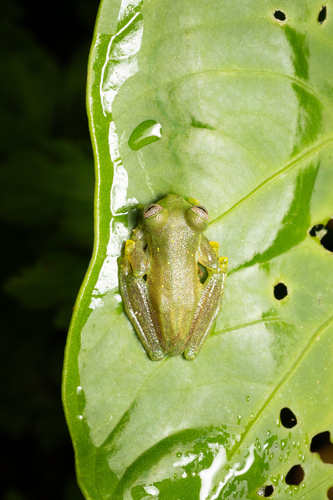
 Pijaos' Glassfrog
Nymphargus pijao

Savage's Cochran Frog
Centrolene savagei

 Glass Frog
Centrolene quindianum
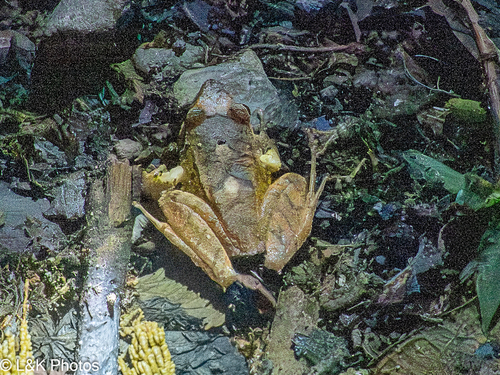
Northern Cordilleras Robber Frog
Pristimantis thectopternus

Cordillera central tree frog
Hyloscirtus larinopygion

 Stripe-throated Rocket Frog
Leucostethus brachistriatus

Cachabi Robber Frog
Pristimantis achatinus

Boettger's Colombian Tree Frog
Dendropsophus columbianus

Palmer's Robber Frog
Pristimantis palmeri

Andean Orange-thighed Frog
Pristimantis permixtus

Boulenger's robber frog
Pristimantis boulengeri

Las Hermosas Robber Frog
Pristimantis racemus
Global Distribution
Warmer areas are where this animal is recorded most often.
Parks Where Found
| # | Park | Country | Daily sighting probability |
|---|---|---|---|
| 1 | Los Nevados National Natural Park | 🇨🇴 Colombia |
More parks will be added in future updates.