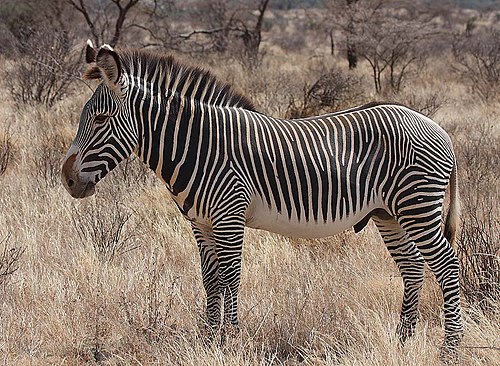


Grévy's Zebra
Equus grevyi
Silhouette: Kai Caspar · PhyloPic
- KingdomAnimalia (Animals)
- PhylumChordata (Chordates)
- ClassMammalia (Mammals)
- OrderPerissodactyla (Odd-toed Ungulates)
- FamilyEquidae (Equines)
- GenusEquus (Equines)
- SpeciesEquus grevyi (Grévy's Zebra)
About the Grévy's Zebra
Grévy's zebra (Equus grevyi), also known commonly as the imperial zebra, is the largest living species of wild equid and the most threatened of the three species of zebras, the other two being the plains zebra and the mountain zebra. Named after French president Jules Grévy, it is found in parts of Kenya and Ethiopia. Superficially, Grévy's zebra's physical features can help to identify it from the other zebra species; its overall appearance is slightly closer to that of a mule and donkey, compared to the more "equine" (horse) appearance of the plains and mountain zebras. Compared to other zebra species, Grévy's zebra is the tallest; it has mule-like, larger ears, and has the narrowest stripes of all zebras. It has a distinctively erect mane, and a more slender snout.
Grévy's zebra lives in semi-arid savanna, where it feeds on grasses, legumes, and browse, such as acacia; it can survive up to five days without water. It differs from the other zebra species in that it does not live in a harem, and it maintains few long-lasting social bonds. Stallion territoriality and mother–foal relationships form the basis of the social system of the Grévy's zebra. Despite a handful of zoos and animal parks around the world having had successful captive-breeding programs, in its native home this zebra is listed by the IUCN as endangered. Its population has declined from 15,000 to 2,000 since the 1970s. In 2016, the population was reported to be "stable"; however, as of 2020, the wild numbers are still estimated at only around 2,250 animals, in part due to anthrax outbreaks in eastern Africa. Wikipedia →
Recent sightings of Grévy's Zebra in Meru National Park
LIVEiNaturalistClosest Relatives at Meru National Park


Global Distribution
Warmer areas are where this animal is recorded most often.
Parks Where Found
| # | Park | Country | Daily sighting probability |
|---|---|---|---|
| 1 | Samburu National Reserve | 🇰🇪 Kenya | |
| 2 | Meru National Park | 🇰🇪 Kenya | |
| 3 | Tsavo East National Park | 🇰🇪 Kenya |