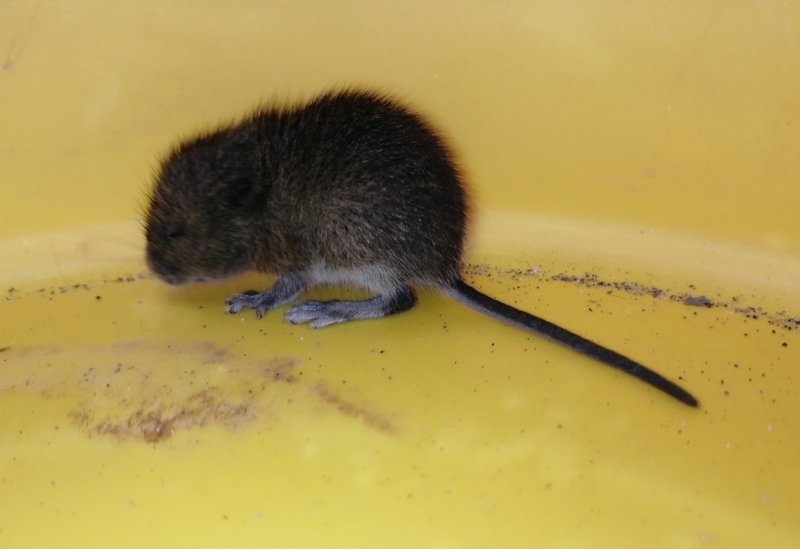

Chilean climbing mouse
Irenomys tarsalis
Silhouette: T. Michael Keesey · PhyloPic
- KingdomAnimalia (Animals)
- PhylumChordata (Chordates)
- ClassMammalia (Mammals)
- OrderRodentia (Rodents)
- FamilyCricetidae (Hamsters, Voles, Lemmings, and Allies)
- GenusIrenomys
- SpeciesIrenomys tarsalis (Chilean climbing mouse)
About the Chilean climbing mouse
Irenomys tarsalis, also known as the Chilean climbing mouse, Chilean tree mouse, or long-footed irenomys, is a rodent found in Chile, from about 36° to 46°S, and in adjacent Argentina, mainly in forests. It is a large, long-tailed, soft-furred mouse characterized by grooved upper incisors and specialized molars with transverse ridges, divided by deep valleys, which are connected by a transverse ridge along the midline of the molars.
Irenomys tarsalis is a docile, herbivorous animal that lives in trees. It is so distinct from other species that it was placed in its own genus, Irenomys, in 1919. The name comes from the Ancient Greek word εἰρήνη (iren) meaning "peace", in reference to the end of World War I. Although it has been generally placed in the tribe Phyllotini, genetic evidence does not support any close relationships with other genera, so that it is now classified as a member of the subfamily Sigmodontinae incertae sedis (of uncertain position).
In 1900, Rodolfo Armando Philippi named both Mus tarsalis (from Valdivia Province in mainland Chile) and Reithrodon longicaudatus (from a small island near Chiloé), both of which are now classified as Irenomys tarsalis... Wikipedia →
Recent sightings of Chilean climbing mouse in Nahuel Huapi National Park
LIVEiNaturalistClosest Relatives at Nahuel Huapi National Park


Global Distribution
Warmer areas are where this animal is recorded most often.
Parks Where Found
| # | Park | Country | Daily sighting probability |
|---|---|---|---|
| 1 | Nahuel Huapi National Park | 🇦🇷 Argentina |
More parks will be added in future updates.