
Sand Tiger Shark
Carcharias taurus
- KingdomAnimalia (Animals)
- PhylumChordata (Chordates)
- ClassElasmobranchii
- OrderLamniformes (Mackerel Sharks)
- FamilyOdontaspididae (Sand Sharks)
- GenusCarcharias
- SpeciesCarcharias taurus (Sand Tiger Shark)
About the Sand Tiger Shark
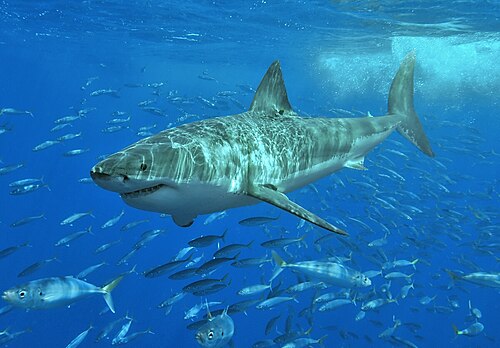
The sand tiger shark (Carcharias taurus), also commonly known as the spotted ragged-tooth shark in South Africa, grey nurse shark in Australia, or blue-nurse sand tiger in India, is a species of shark that inhabits subtropical and temperate waters worldwide. It inhabits the continental shelf, from sandy shorelines (hence the name sand tiger shark) and submerged reefs to a depth of around 191 m (627 ft). They dwell in the waters of Japan, Australia, South Africa, and the east coasts of North and South America. The sand tiger shark also inhabited the Mediterranean; however, it was last seen there in 2003 and is presumed extirpated. Despite its common names, it is not closely related to either the tiger shark (Galeocerdo cuvier) or the nurse shark (Ginglymostoma cirratum).
Despite its fearsome appearance and strong swimming ability, it is a relatively placid and slow-moving shark with no confirmed human fatalities. This species has a sharp, pointy head, and a bulky body. The sand tiger's length can reach 3.2 m (10.5 ft) but is normally 2.2–2.5 m in length. They are grey with reddish-brown spots on their backs. Shivers (groups) have been observed to hunt large schools of fish. Their diet consists of bony fish, crustaceans, squid, skates and other sharks. Unlike other sharks, the sand tiger can gulp air from the surface, allowing it to be suspended in the water column with minimal effort. During pregnancy, the most developed embryo will feed on its siblings, a reproductive strategy known as intrauterine cannibalism i.e. "embryophagy" or, more colorfully, adelphophagy—literally "eating one's brother". The sand tiger is categorized as critically endangered on the International Union for Conservation of Nature Red List. It is the most widely kept large shark in public aquariums owing to its tolerance for captivity. Wikipedia →
Closest Relatives at Ningaloo Marine Park
Global Distribution
Where this species is recorded worldwide. Restricted to human observations from 2019 onwards — the same kind of record and the same period the probabilities on this page are built from, so collar-tracking studies, camera-trap arrays and museum specimens are excluded. Around Santa Rosa that removes 5,924 GPS fixes from a handful of tagged jaguars.
where this species is recorded (GBIF density — it tracks where observers go, not how likely a sighting is) · parks where it occurs — tap a pin for the sighting probability there
Parks Where Found
| # | Park | Country | Daily sighting probability |
|---|---|---|---|
| 1 | Ningaloo Marine Park | 🇦🇺 Australia |
More parks will be added in future updates.