

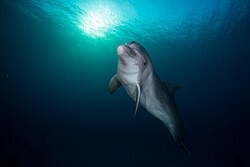



Indo-Pacific Bottlenose Dolphin
Tursiops aduncus
Silhouette: Chris huh · PhyloPic
- KingdomAnimalia (Animals)
- PhylumChordata (Chordates)
- ClassMammalia (Mammals)
- OrderCetacea
- FamilyDelphinidae (Oceanic Dolphins)
- GenusTursiops (Bottlenose Dolphins)
- SpeciesTursiops aduncus (Indo-Pacific Bottlenose Dolphin)
About the Indo-Pacific Bottlenose Dolphin
The Indo-Pacific bottlenose dolphin (Tursiops aduncus) is a species of bottlenose dolphin. This dolphin grows to 2.6 m (8.5 ft) long, and weighs up to 230 kg (510 lb). It lives in the waters around India, northern Australia, South China, the Red Sea, and the eastern coast of Africa. Its back is dark grey and its belly is lighter grey or nearly white with grey spots.
The Indo-Pacific bottlenose dolphin is generally smaller than the common bottlenose dolphin, has a proportionately longer rostrum, and has spots on its belly and lower sides. It also has more teeth than the common bottlenose dolphin — 23 to 29 teeth on each side of each jaw compared to 21 to 24 for the common bottlenose dolphin.
Much of the old scientific data in the field combine data about the Indo-Pacific bottlenose dolphin and the common bottlenose dolphin into a single group, making it effectively useless in determining the structural differences between the two species. The IUCN lists the Indo-Pacific bottlenose dolphin as "near threatened" in their Red List of endangered species.
Until 1998, all bottlenose dolphins were considered members of the single species T. truncatus. But in that year, the Indo... Wikipedia →
Recent sightings of Indo-Pacific Bottlenose Dolphin in Noosa National Park
LIVEiNaturalistClosest Relatives at Noosa National Park


Global Distribution
Warmer areas are where this animal is recorded most often.
Parks Where Found
| # | Park | Country | Daily sighting probability |
|---|---|---|---|
| 1 | Ningaloo Marine Park | 🇦🇺 Australia | |
| 2 | Raja Ampat | 🇮🇩 Indonesia | |
| 3 | iSimangaliso Wetland Park | 🇿🇦 South Africa | |
| 4 | Noosa National Park | 🇦🇺 Australia | |
| 5 | Garden Route National Park | 🇿🇦 South Africa | |
| 6 | Royal National Park | 🇦🇺 Australia | |
| 7 | Table Mountain National Park | 🇿🇦 South Africa | |
| 8 | Booderee National Park | 🇦🇺 Australia | |
| 9 | Komodo National Park | 🇮🇩 Indonesia | |
| 10 | Daintree National Park | 🇦🇺 Australia | |
| 11 | Tsavo East National Park | 🇰🇪 Kenya | |
| 12 | Addo Elephant National Park | 🇿🇦 South Africa |
Quick answers
What are the chances of seeing a Indo-Pacific Bottlenose Dolphin in Noosa National Park?
About 10% of wildlife watchers report a Indo-Pacific Bottlenose Dolphin sighting in Noosa National Park, based on 11 verified sightings from GBIF citizen-science data.
When is the best time to see Indo-Pacific Bottlenose Dolphin in Noosa National Park?
July has the highest sighting rate for Indo-Pacific Bottlenose Dolphin in Noosa National Park in our monthly data.