
Silhouette: Jose Carlos Arenas-Monroy · PhyloPic
Mukuzira Long-fingered Frog
Cardioglossa cyaneospila
- KingdomAnimalia (Animals)
- PhylumChordata (Chordates)
- ClassAmphibia (Amphibians)
- OrderAnura (Frogs and Toads)
- FamilyArthroleptidae (Squeakers)
- GenusCardioglossa (Long-fingered Frogs)
- SpeciesCardioglossa cyaneospila (Mukuzira Long-fingered Frog)
About the Mukuzira Long-fingered Frog
Cardioglossa cyaneospila is a species of frog in the family Arthroleptidae. It is endemic to the Albertine Rift area in eastern Democratic Republic of the Congo, southwestern Uganda, Rwanda, and southwestern Burundi. It was described in 1950 by Raymond Laurent based on specimens collected in 1949. No new records were published until 2011. Recent research has uncovered both old unpublished records and several new records, and the conservation status was changed from "data deficient" to "near threatened" in 2016. Common names Bururi long-fingered frog and Mukuzira long-fingered frog have been coined for this species.
Two males from Bururi measure about 31 mm (1.2 in) in snout–vent length. The species is named for its unusual blueish gray color. It has dark spots in its dorsum, a dark mask surrounding the eye and tympanum, and an infratympanic line typical for the genus Cardioglossa. Males have extremely long third fingers.
Cardioglossa cyaneospila occurs in montane forests at elevations of 1,470–2,300 m (4,820–7,550 ft) above sea level, with one imprecise record from about 1,100–1,300 m (3,600–4,300 ft). Specimens have been found active... Wikipedia →
Recent sightings of Mukuzira Long-fingered Frog in Nyungwe National Park
LIVEiNaturalistClosest Relatives at Nyungwe National Park

 Kisenyi Forest Tree Frog
Leptopelis kivuensis
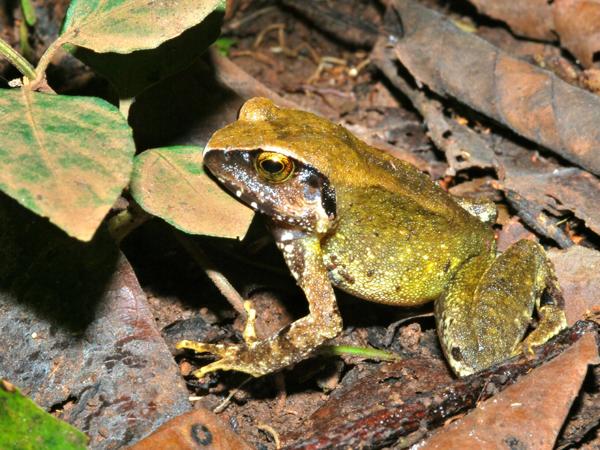
Rugegewald Screeching Frog
Arthroleptis adolfifriederici

 Brown Reed Frog
Hyperolius castaneus
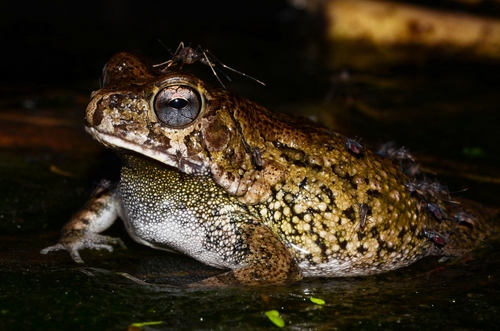
 Eastern Flat-backed Toad
Sclerophrys pusilla

 Yellow-Bellied Ridged Frog
Ptychadena chrysogaster
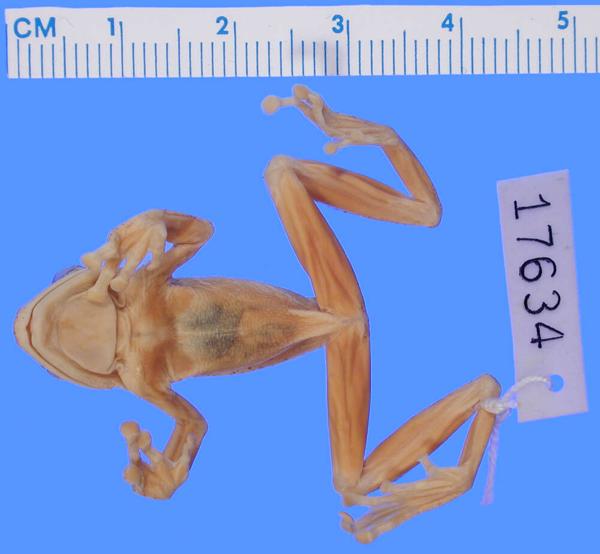
Highland Reed Frog
Hyperolius discodactylus

 De Witte's Clawed Frog
Xenopus wittei

Angolan Reed Frog
Hyperolius parallelus

 Crowned bullfrog
Hoplobatrachus occipitalis

Müller's Platanna
Xenopus muelleri
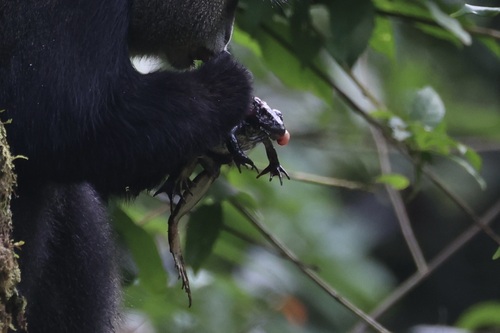
Nutt's River Frog
Amietia nutti
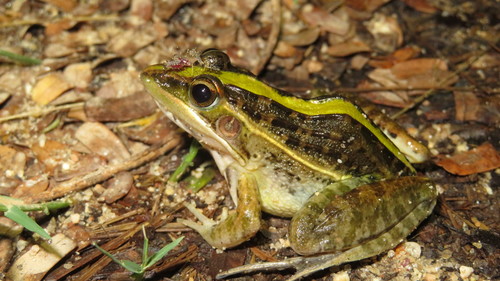
Nile Ridged Frog
Ptychadena nilotica
Global Distribution
Warmer areas are where this animal is recorded most often.
Parks Where Found
| # | Park | Country | Daily sighting probability |
|---|---|---|---|
| 1 | Nyungwe National Park | 🇷🇼 Rwanda |
More parks will be added in future updates.