
Big-eared Flying Fox
Pteropus macrotis
- KingdomAnimalia (Animals)
- PhylumChordata (Chordates)
- ClassMammalia (Mammals)
- OrderChiroptera (Bats)
- FamilyPteropodidae (Old World Fruit Bats)
- GenusPteropus (Flying-foxes)
- SpeciesPteropus macrotis (Big-eared Flying Fox)
About the Big-eared Flying Fox
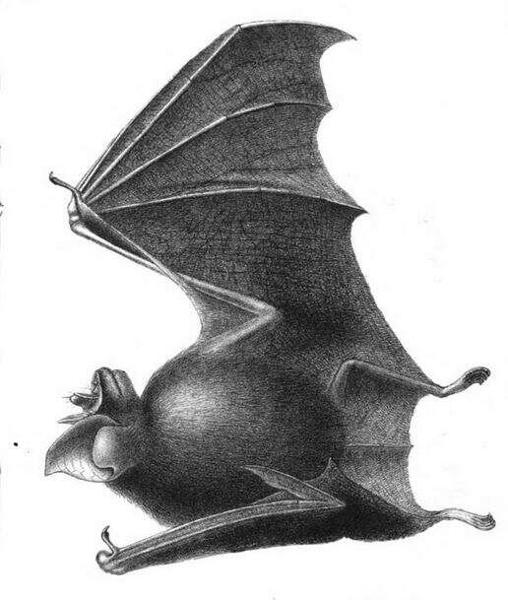
The big-eared flying fox (Pteropus macrotis) is a species of bat in the family Pteropodidae, larger bats who subsist largely on fruits. The species is distributed across a range in Indonesia, Papua New Guinea and islands nearing the Cape York Peninsula at the northeast of Australia, at elevations less than 500 metres and often in coastal mangroves.
Pteropus macrotis was described as a new species in 1867 by German naturalist Wilhelm Peters. The holotype had been collected on the Indonesian island of Buru. Its species name "macrotis" comes from Ancient Greek makrós meaning "long" and oûs meaning "ear".
P. macrotis is also referred to by the common name large-eared flying-fox. Distinguished in the region as a smaller species of the Pteropus genus, their forearm length ranges from 143 to 157 millimetres. The pelage is uniformly dark brown, but for yellowish coloration at the mantle (chest) and highlights of the ventral fur.
The ears of P. macrotis are distinctly elongated to a fine point, the length from notch to tip is 30 to 37 mm. A range in length of the head and body combined is recorded as 180 to 240 mm, their mass is from 315 to 425... Wikipedia →
Closest Relatives at Raja Ampat

Spectacled Flying Fox
Pteropus conspicillatus

Moluccan Naked-backed Fruit Bat
Dobsonia moluccensis

Beaufort's Naked-backed Fruit Bat
Dobsonia beauforti

Lesser Long-tongued Fruit Bat
Macroglossus minimus

Broad-striped Tube-nosed Fruit Bat
Nyctimene aello

Dark Sheath-tailed Bat
Mosia nigrescens

Diadem Roundleaf Bat
Hipposideros diadema
Raffray's sheath-tailed bat
Emballonura raffrayana
broad-eared horseshoe bat
Rhinolophus euryotis
Global Distribution
Where this species is recorded worldwide. Restricted to human observations from 2019 onwards — the same kind of record and the same period the probabilities on this page are built from, so collar-tracking studies, camera-trap arrays and museum specimens are excluded. Around Santa Rosa that removes 5,924 GPS fixes from a handful of tagged jaguars.
where this species is recorded (GBIF density — it tracks where observers go, not how likely a sighting is) · parks where it occurs — tap a pin for the sighting probability there
Parks Where Found
| # | Park | Country | Daily sighting probability |
|---|---|---|---|
| 1 | Raja Ampat | 🇮🇩 Indonesia |
More parks will be added in future updates.