
Black-capped Lory
Lorius lory
- KingdomAnimalia (Animals)
- PhylumChordata (Chordates)
- ClassAves (Birds)
- OrderPsittaciformes (Parrots)
- FamilyPsittacidae (New World and African Parrots)
- GenusLorius (Broad-tailed Lories)
- SpeciesLorius lory (Black-capped Lory)
About the Black-capped Lory
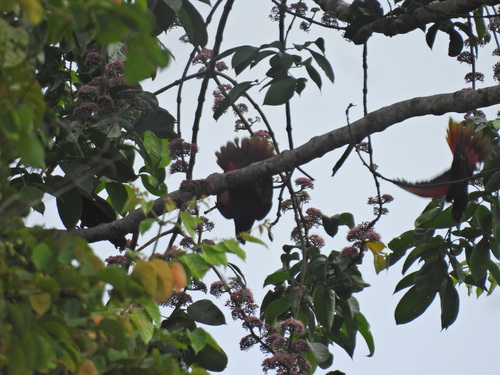
The black-capped lory (Lorius lory) also known as western black-capped lory or the tricolored lory, is a parrot found in New Guinea and adjacent smaller islands. It is a colourful and relatively robust lory (31 cm (12 in)). There are seven subspecies, all with green wings, red heads and body around the wing, a black cap, grey-black cere, yellow underwings, and blue legs and belly. Most also have a blue nape and mantle (area between wings on the back). It remains overall widespread and common, but the subspecies cyanuchen is relatively rare, with fewer than 5,000 individuals remaining.
The black-capped lory was formally described by the Swedish naturalist Carl Linnaeus in 1758 in the tenth edition of his Systema Naturae under the binomial name Psittacus lory. Linnaeus based his description of "The first Black Capped Lory" that had been described and illustrated in 1751 by the English naturalist George Edwards in his A Natural History of Uncommon Birds. The name lory is from the Malay word for these brightly coloured parrots. The black-capped lory is now placed in the genus Lorius that was introduced in 1825 by the Irish zoologist Nicholas Aylward Vigors. Wikipedia →
Closest Relatives at Raja Ampat

Chattering Lory
Lorius garrulus

Red-sided Eclectus
Eclectus roratus

Red-cheeked Parrot
Geoffroyus geoffroyi

Palm Cockatoo
Probosciger aterrimus

Sulphur-crested Cockatoo
Cacatua galerita

Coconut Lorikeet
Trichoglossus haematodus

Great-billed Parrot
Tanygnathus megalorynchos

Yellow-capped Pygmy-Parrot
Micropsitta keiensis

Double-eyed Fig-Parrot
Cyclopsitta diophthalma

Moluccan King-Parrot
Alisterus amboinensis

Salmon-crested Cockatoo
Cacatua moluccensis
Black Lory
Chalcopsitta atra
Global Distribution
Where this species is recorded worldwide. Restricted to human observations from 2019 onwards — the same kind of record and the same period the probabilities on this page are built from, so collar-tracking studies, camera-trap arrays and museum specimens are excluded. Around Santa Rosa that removes 5,924 GPS fixes from a handful of tagged jaguars.
where this species is recorded (GBIF density — it tracks where observers go, not how likely a sighting is) · parks where it occurs — tap a pin for the sighting probability there
Parks Where Found
| # | Park | Country | Daily sighting probability |
|---|---|---|---|
| 1 | Raja Ampat | 🇮🇩 Indonesia |
More parks will be added in future updates.
Quick answers
What are the chances of seeing a Black-capped Lory in Raja Ampat?
About 30% of wildlife watchers report a Black-capped Lory sighting in Raja Ampat, based on 29 verified sightings from GBIF citizen-science data.
When is the best time to see Black-capped Lory in Raja Ampat?
June has the highest sighting rate for Black-capped Lory in Raja Ampat in our monthly data.