
Lesser Long-tongued Fruit Bat
Macroglossus minimus
- KingdomAnimalia (Animals)
- PhylumChordata (Chordates)
- ClassMammalia (Mammals)
- OrderChiroptera (Bats)
- FamilyPteropodidae (Old World Fruit Bats)
- GenusMacroglossus (Long-tongued Fruit Bats)
- SpeciesMacroglossus minimus (Lesser Long-tongued Fruit Bat)
About the Lesser Long-tongued Fruit Bat
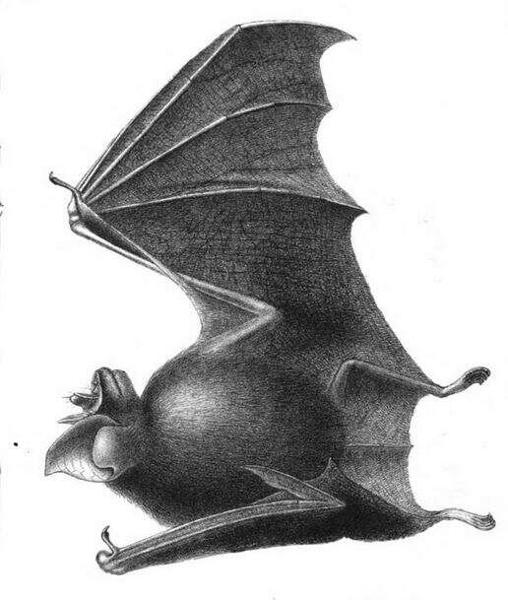
The long-tongued nectar bat (Macroglossus minimus), also known as the northern blossom bat, honey nectar bat, least blossom-bat, dagger-toothed long-nosed fruit bat, and lesser long-tongued fruit bat, is a species of megabat. M. minimus is one of the smallest species in the family Pteropodidae, with an average length of 60–85 mm. It has a reddish-brown colouring with relatively long hair compared to the other species. The hair on the abdomen is a lighter colour, and a dark brown stripe runs bilaterally down the top of the head and back.
Its wide geographical range includes Thailand, Peninsular Malaysia, southern Philippines, Java, Borneo, New Guinea, the Solomon Islands, and northern Australia. In Borneo, it had been recorded from Kota Kinabalu, Sepilok, Sukau, and Tawau in Sabah; Bandar Seri Begawan in Brunei; Bario, Niah and Bako in Sarawak; Gunung Kenepi, Kutai, and Sungai Tengah in Kalimantan.
M. minimus has not been recorded in colonies, which suggest they live in small groups or alone. It feeds on nectar and pollen, which it can obtain from mangroves and banana flowers in Malaysia. Ecologically, the long-tongued nectar bat plays a major role as pollinator of... Wikipedia →
Closest Relatives at Raja Ampat

Moluccan Naked-backed Fruit Bat
Dobsonia moluccensis

Spectacled Flying Fox
Pteropus conspicillatus

Beaufort's Naked-backed Fruit Bat
Dobsonia beauforti

Broad-striped Tube-nosed Fruit Bat
Nyctimene aello

Big-eared Flying Fox
Pteropus macrotis

Dark Sheath-tailed Bat
Mosia nigrescens

Diadem Roundleaf Bat
Hipposideros diadema
Raffray's sheath-tailed bat
Emballonura raffrayana
broad-eared horseshoe bat
Rhinolophus euryotis
Global Distribution
Where this species is recorded worldwide. Restricted to human observations from 2019 onwards — the same kind of record and the same period the probabilities on this page are built from, so collar-tracking studies, camera-trap arrays and museum specimens are excluded. Around Santa Rosa that removes 5,924 GPS fixes from a handful of tagged jaguars.
where this species is recorded (GBIF density — it tracks where observers go, not how likely a sighting is) · parks where it occurs — tap a pin for the sighting probability there
Parks Where Found
| # | Park | Country | Daily sighting probability |
|---|---|---|---|
| 1 | Danum Valley Conservation Area | 🇲🇾 Malaysia | |
| 2 | Raja Ampat | 🇮🇩 Indonesia | |
| 3 | Sepilok | 🇲🇾 Malaysia |