
Littoral Whiptail-skink
Emoia atrocostata
- KingdomAnimalia (Animals)
- PhylumChordata (Chordates)
- ClassSquamata
- FamilyScincidae (Skinks)
- GenusEmoia (Emo Skinks)
- SpeciesEmoia atrocostata (Littoral Whiptail-skink)
About the Littoral Whiptail-skink
Emoia atrocostata, commonly known as the littoral whiptail-skink, mangrove skink, or littoral skink, is a species of lizard in the family Scincidae. It inhabits mangroves, back-beach vegetation and rocky shorelines. It is semi-aquatic and forages in tidal pools.
The species can be distinguished from the similar many-lined sun skink by the lack of keeled scales on the dorsal surface of the Mangrove Skink. Its colour is grey or brown-grey, flecked with black. There is a faint black band along each side. The throat is often bluish, and the belly greenish or yellow to orange.
E. atrocostata can be found on the Ryukyu Islands, Taiwan, the Philippines, Indonesia, Malaysia, Vietnam, Papua New Guinea, the Solomon Islands, Vanuatu and in Queensland, Australia. Duméril & Bibron, 1839 : Erpétologie Générale ou Histoire Naturelle Complète des Reptiles. vol. 5, Roret/Fain et Thunot, Paris, p. 1-871 (full text).
Lesson, 1830 : Description de quelques reptiles nouveaux ou peu connus. Voyage Autour du Monde Execute par Ordre du Roi, sur la Corvette de La Majeste, La Coquille, exécuté Pendant les Annees 1822, 1823, 1824 et... Wikipedia →
Closest Relatives at Raja Ampat

Pacific Bluetail Skink
Emoia caeruleocauda

Kopstein's Emo Skink
Emoia jakati
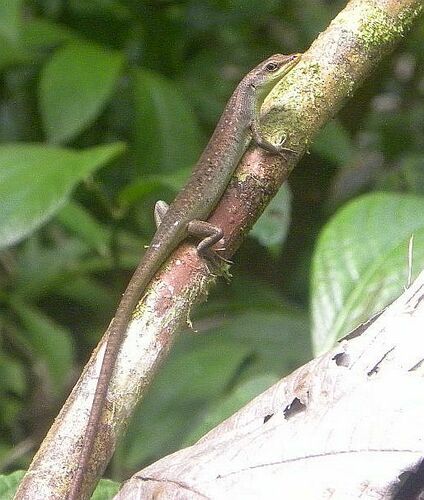
Shrub Whiptail-skink
Emoia longicauda
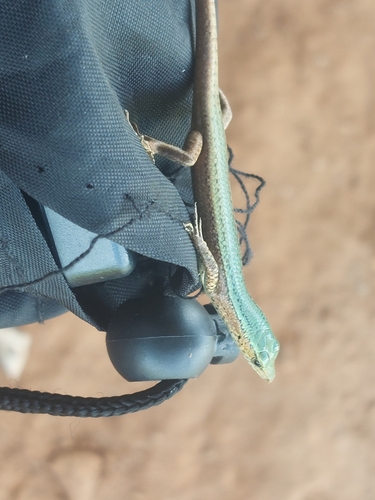
Meyer's Emo Skink
Emoia kordoana

Slender Emo Skink
Emoia physicae

Indonesian Brown Skink Carlia
Carlia fusca

Emerald Tree Skink
Lamprolepis smaragdina
Common Forest Skink
Sphenomorphus simus

Many-lined Sun-skink
Eutropis multifasciata

New Guinea Snake-eyed Skink
Cryptoblepharus novaeguineae

Müller's Forest Skink
Sphenomorphus muelleri
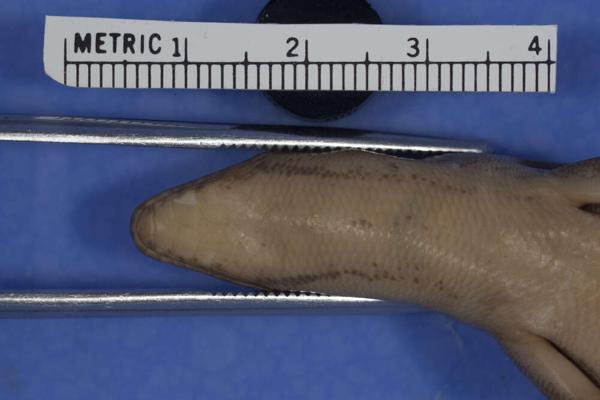
Yapen Forest Skink
Sphenomorphus jobiensis
Global Distribution
Where this species is recorded worldwide. Restricted to human observations from 2019 onwards — the same kind of record and the same period the probabilities on this page are built from, so collar-tracking studies, camera-trap arrays and museum specimens are excluded. Around Santa Rosa that removes 5,924 GPS fixes from a handful of tagged jaguars.
where this species is recorded (GBIF density — it tracks where observers go, not how likely a sighting is) · parks where it occurs — tap a pin for the sighting probability there
Parks Where Found
| # | Park | Country | Daily sighting probability |
|---|---|---|---|
| 1 | Bako National Park | 🇲🇾 Malaysia | |
| 2 | Raja Ampat | 🇮🇩 Indonesia | |
| 3 | Tangkoko Nature Reserve | 🇮🇩 Indonesia | |
| 4 | Tanjung Puting National Park | 🇮🇩 Indonesia | |
| 5 | Sepilok | 🇲🇾 Malaysia |
Quick answers
What are the chances of seeing a Littoral Whiptail-skink in Raja Ampat?
About 30% of wildlife watchers report a Littoral Whiptail-skink sighting in Raja Ampat, based on 29 verified sightings from GBIF citizen-science data.
When is the best time to see Littoral Whiptail-skink in Raja Ampat?
December has the highest sighting rate for Littoral Whiptail-skink in Raja Ampat in our monthly data.