
Silhouette: Dmitry Bogdanov (vectorized by T. Michael Keesey) · PhyloPic
New Guinea Bush Frog
Asterophrys turpicola
- KingdomAnimalia (Animals)
- PhylumChordata (Chordates)
- ClassAmphibia (Amphibians)
- OrderAnura (Frogs and Toads)
- FamilyMicrohylidae (Narrow-mouthed Frogs)
- GenusAsterophrys
- SpeciesAsterophrys turpicola (New Guinea Bush Frog)
About the New Guinea Bush Frog
Asterophrys turpicola (common name: New Guinea bush frog) is a species of frog in the family Microhylidae. It is widespread in New Guinea and found in both West Papua (Indonesia) and Papua New Guinea, although it appears to be absent from the eastern half of Papua New Guinea. It also occurs on the island of Yapen, off the north-western coast of New Guinea. The species is known for its aggressive behaviour: it can attack and bite viciously.
Asterophrys turpicola grows to a maximum size of 65 mm (2.6 in) in snout–vent length. The head is very broad, as wide as the body. There is an elongated, spine-like tubercle on each eyelid, and two prominent tubercles on the lower jaw. The tongue is blue. The fingers and toes have expanded discs. The colouration is drab with shades of brown and black, but the hands and feet are pigmented. The limbs and sides of the body bears warts.
Asterophrys turpicola shows unusual defensive behaviours: when threatened, the frog takes an aggressive posture, inflating its body and opening its mouth widely, thus exposing its blue tongue. It may also attack the enemy, leaping forward with its mouth open and biting the potential predator... Wikipedia →
Closest Relatives at Raja Ampat
Wondiwoi Callulops Frog
Asterophrys pullifer
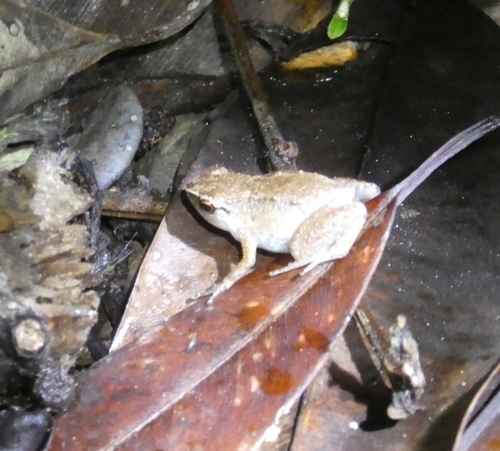
Cophixalus rajampatensis
Cophixalus rajampatensis

Cophixalus salawatiensis
Cophixalus salawatiensis
Unicoloured Cross Frog
Oreophryne unicolor
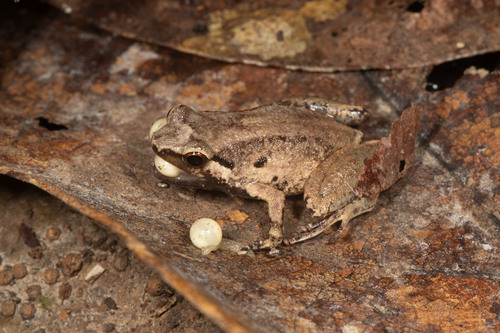
Bomberai Rainforest Frog
Cophixalus tetzlaffi
Manikion Land Frog
Austrochaperina macrorhyncha
Wirui Mehely Frog
Copiula pipiens
Callulops kampeni
Callulops kampeni

White-lipped Treefrog
Nyctimystes infrafrenatus

Papua Wrinkled Ground Frog
Cornufer papuensis
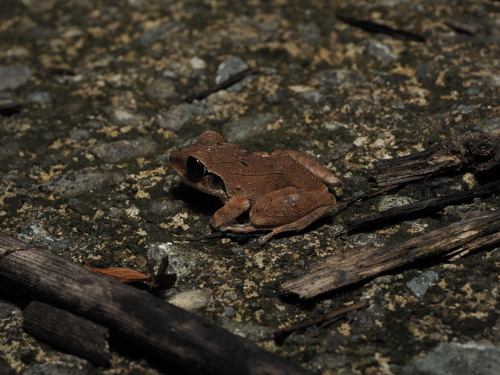
Batanta Wrinkled Ground Frog
Cornufer batantae
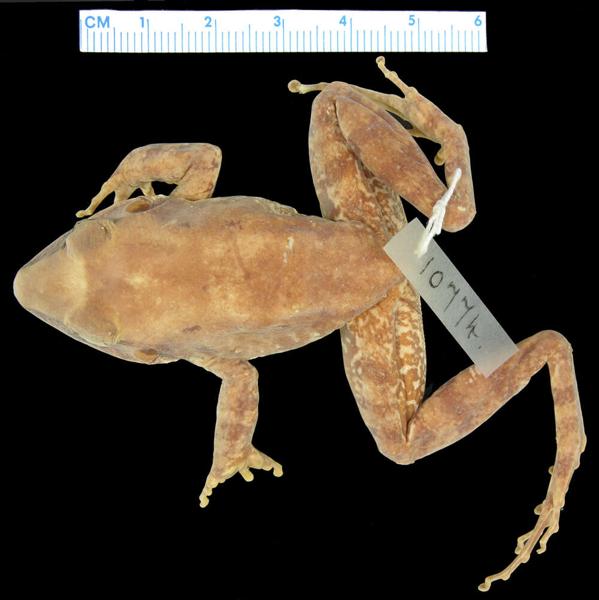
Dotted Wrinkled Ground Frog
Cornufer punctatus
Global Distribution
Where this species is recorded worldwide. Restricted to human observations from 2019 onwards — the same kind of record and the same period the probabilities on this page are built from, so collar-tracking studies, camera-trap arrays and museum specimens are excluded. Around Santa Rosa that removes 5,924 GPS fixes from a handful of tagged jaguars.
where this species is recorded (GBIF density — it tracks where observers go, not how likely a sighting is) · parks where it occurs — tap a pin for the sighting probability there
Parks Where Found
| # | Park | Country | Daily sighting probability |
|---|---|---|---|
| 1 | Raja Ampat | 🇮🇩 Indonesia |
More parks will be added in future updates.
Quick answers
What are the chances of seeing a New Guinea Bush Frog in Raja Ampat?
About 20% of wildlife watchers report a New Guinea Bush Frog sighting in Raja Ampat, based on 14 verified sightings from GBIF citizen-science data.
When is the best time to see New Guinea Bush Frog in Raja Ampat?
September has the highest sighting rate for New Guinea Bush Frog in Raja Ampat in our monthly data.