
Pacific Dtella
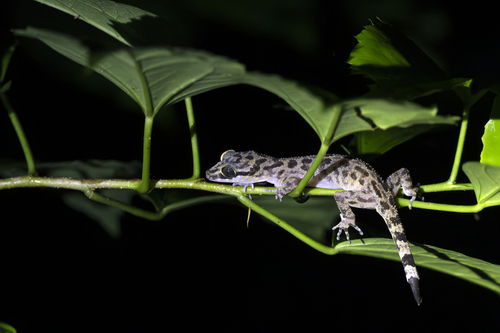
Gehyra oceanica
- KingdomAnimalia (Animals)
- PhylumChordata (Chordates)
- ClassSquamata
- FamilyGekkonidae (Typical Geckos)
- GenusGehyra (Dtellas)
- SpeciesGehyra oceanica (Pacific Dtella)
About the Pacific Dtella
Gehyra oceanica, also known as the Oceania gecko or Pacific dtella, is a species of gecko in the genus Gehyra. The larger Gehyra vorax (voracious gecko) of Fiji, Vanuatu and New Guinea has sometimes been included in this species, but is now treated as distinct.
The species is native to New Guinea and a number of islands in Melanesia, Micronesia and Polynesia. It has also been widely introduced across the islands of the Pacific, reaching as far as the Marquesas Islands in Polynesia (where the species was first collected for science), although the extent to which the species has been introduced by human intervention is a matter of some debate. There are two apparent populations, a northern one in Micronesia and a southern one in Melanesia and Polynesia. There are also records of the species in New Zealand and Hawaii, but the species has apparently not become established there.
The species is generally arboreal and nocturnal. The diet includes insects and even smaller geckos. Some stomachs have also been found with seeds from fruit. It reproduces sexually, and unlike some other geckos in its genus its eggs are non-adhesive. The species shares communal nests of not more than twelve eggs in each, with only two eggs being laid by a female at a time. These eggs have a long incubation time, up to 115 days. It inhabits a range of habitats including plantations, gardens, and disturbed and undisturbed forests. The species will also feed inside human buildings, but is not described as commensal. Wikipedia →
Closest Relatives at Raja Ampat
Papua Dtella
Gehyra papuana

Mourning Gecko
Lepidodactylus lugubris

Common House Gecko
Hemidactylus frenatus
Papua Bow-fingered Gecko
Cyrtodactylus papuensis

Lined Gecko
Gekko vittatus

Flat-tailed House Gecko
Hemidactylus platyurus
Batanta Bent-toed Gecko
Cyrtodactylus zugi
West Irian Bent-toed Gecko
Cyrtodactylus irianjayaensis
Salawati Scaly-toed Gecko
Lepidodactylus pollostos

Common Dwarf Gecko
Hemiphyllodactylus typus

Pelagic Gecko
Nactus pelagicus
Global Distribution
Where this species is recorded worldwide. Restricted to human observations from 2019 onwards — the same kind of record and the same period the probabilities on this page are built from, so collar-tracking studies, camera-trap arrays and museum specimens are excluded. Around Santa Rosa that removes 5,924 GPS fixes from a handful of tagged jaguars.
where this species is recorded (GBIF density — it tracks where observers go, not how likely a sighting is) · parks where it occurs — tap a pin for the sighting probability there
Parks Where Found
| # | Park | Country | Daily sighting probability |
|---|---|---|---|
| 1 | Raja Ampat | 🇮🇩 Indonesia |
More parks will be added in future updates.