
Red-eyed Crocodile Skink
Tribolonotus gracilis
- KingdomAnimalia (Animals)
- PhylumChordata (Chordates)
- ClassSquamata
- FamilyScincidae (Skinks)
- GenusTribolonotus (Helmet Skinks)
- SpeciesTribolonotus gracilis (Red-eyed Crocodile Skink)
About the Red-eyed Crocodile Skink
Tribolonotus gracilis, commonly known as the red-eyed crocodile skink or New Guinea crocodile skink, is a species of skink that is endemic to New Guinea, where it lives in tropical rainforest habitats. It was first described by Nelly de Rooij in 1909. It is sometimes kept as an exotic pet.
Tribolonotus gracilis is one of the few species of skinks that vocalize when in distress. When startled, they tend to freeze and have been known to "play dead" (even when handled). A male red-eyed crocodile skink can be identified by the white pads (pores) on his feet. Female red-eyed crocodile skinks have two working ovaries, but only the right oviduct is functional; therefore, eggs from the left ovary must migrate across the body cavity prior to oviposition. She often curls around the egg and aggressively defends it when approached by a perceived threat. If it is uncovered, she will cover it back up. Male crocodile skinks battle other males. Red-eyed crocodile skinks lay only one egg per clutch which is why it receives such heavy protection from both of its parents.
Red-eyed crocodile skinks are carnivorous with a particular taste for insects. The standard... Wikipedia →
Closest Relatives at Raja Ampat

Pacific Bluetail Skink
Emoia caeruleocauda

Indonesian Brown Skink Carlia
Carlia fusca

Emerald Tree Skink
Lamprolepis smaragdina

Littoral Whiptail-skink
Emoia atrocostata

Kopstein's Emo Skink
Emoia jakati
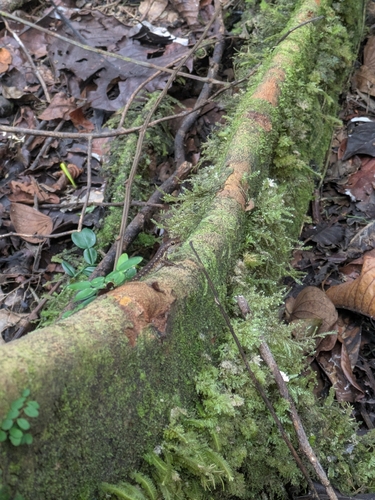
Common Forest Skink
Sphenomorphus simus

Many-lined Sun-skink
Eutropis multifasciata

New Guinea Snake-eyed Skink
Cryptoblepharus novaeguineae
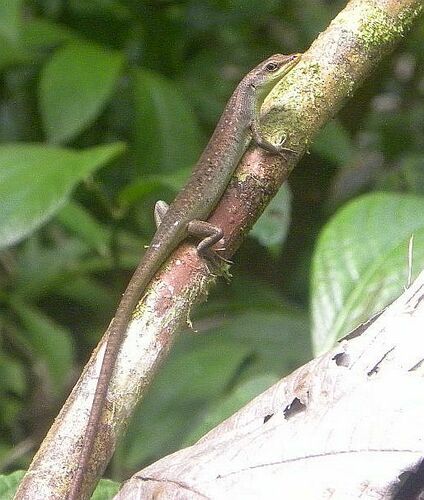
Shrub Whiptail-skink
Emoia longicauda

Müller's Forest Skink
Sphenomorphus muelleri
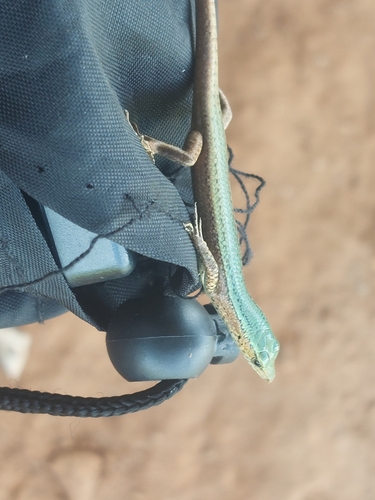
Meyer's Emo Skink
Emoia kordoana

Slender Emo Skink
Emoia physicae
Global Distribution
Where this species is recorded worldwide. Restricted to human observations from 2019 onwards — the same kind of record and the same period the probabilities on this page are built from, so collar-tracking studies, camera-trap arrays and museum specimens are excluded. Around Santa Rosa that removes 5,924 GPS fixes from a handful of tagged jaguars.
where this species is recorded (GBIF density — it tracks where observers go, not how likely a sighting is) · parks where it occurs — tap a pin for the sighting probability there
Parks Where Found
| # | Park | Country | Daily sighting probability |
|---|---|---|---|
| 1 | Raja Ampat | 🇮🇩 Indonesia |
More parks will be added in future updates.