
Red-necked Stint
Calidris ruficollis
- KingdomAnimalia (Animals)
- PhylumChordata (Chordates)
- ClassAves (Birds)
- OrderCharadriiformes (Shorebirds and Allies)
- FamilyScolopacidae (Sandpipers and Allies)
- GenusCalidris (Calidris Sandpipers)
- SpeciesCalidris ruficollis (Red-necked Stint)
About the Red-necked Stint
The red-necked stint or rufous-necked stint (Calidris ruficollis) is a small migratory wader that breeds in northeast Russia and spends the non-breeding season along the coastlines of Southeast Asia and Australasia. The red-necked stint was formally described in 1776 by the German naturalist Peter Simon Pallas under the binomial name Trynga ruficollis. The specific epithet ruficollis is Modern Latin meaning "red-necked" from Latin rufus meaning "red" or "rufous" and -collis meaning "-necked" or "-throated". The type locality is southern Transbaikal in eastern Siberia. The red-necked stint is now placed with 23 other species in the genus Calidris that was introduced in 1804 by the German naturalist Blasius Merrem. The species is monotypic, with no subspecies recognised. Within the genus Calidris the red-necked stint is most closely related to the spoon-billed sandpiper (Calidris pygmaea).
These birds are among the smallest of waders, very similar to the little stint, Calidris minuta, with which they were once considered conspecific. The red-necked stint's small size, fine dark bill, dark legs and quicker movements distinguish this species from all waders... Wikipedia →
Closest Relatives at Raja Ampat

Great Knot
Calidris tenuirostris

Curlew Sandpiper
Calidris ferruginea

Little Stint
Calidris minuta

Sharp-tailed Sandpiper
Calidris acuminata

Long-toed Stint
Calidris subminuta

Sanderling
Calidris alba
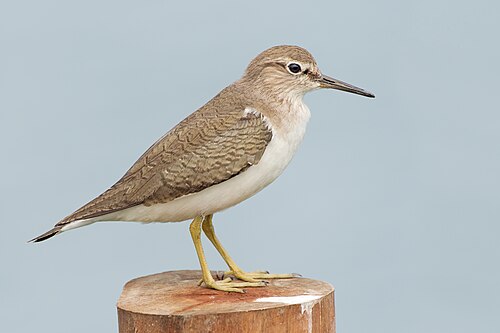
Common Sandpiper
Actitis hypoleucos

Whimbrel
Numenius phaeopus

Red-necked Phalarope
Phalaropus lobatus

Grey-tailed Tattler
Tringa brevipes

Common Greenshank
Tringa nebularia

Bar-tailed Godwit
Limosa lapponica
Global Distribution
Where this species is recorded worldwide. Restricted to human observations from 2019 onwards — the same kind of record and the same period the probabilities on this page are built from, so collar-tracking studies, camera-trap arrays and museum specimens are excluded. Around Santa Rosa that removes 5,924 GPS fixes from a handful of tagged jaguars.
where this species is recorded (GBIF density — it tracks where observers go, not how likely a sighting is) · parks where it occurs — tap a pin for the sighting probability there
Parks Where Found
| # | Park | Country | Daily sighting probability |
|---|---|---|---|
| 1 | Cape Range | 🇦🇺 Australia | |
| 2 | Ningaloo Marine Park | 🇦🇺 Australia | |
| 3 | Bali Barat National Park | 🇮🇩 Indonesia | |
| 4 | Great Otway National Park | 🇦🇺 Australia | |
| 5 | Wilsons Promontory National Park | 🇦🇺 Australia | |
| 6 | Daintree National Park | 🇦🇺 Australia | |
| 7 | Raja Ampat | 🇮🇩 Indonesia | |
| 8 | Booderee National Park | 🇦🇺 Australia | |
| 9 | Royal National Park | 🇦🇺 Australia | |
| 10 | Freycinet National Park | 🇦🇺 Australia | |
| 11 | Grampians National Park | 🇦🇺 Australia | |
| 12 | Maria Island National Park | 🇦🇺 Australia | |
| 13 | Taroko National Park | 🇹🇼 Taiwan |
Quick answers
What are the chances of seeing a Red-necked Stint in Raja Ampat?
Under 5% of wildlife watchers report a Red-necked Stint sighting in Raja Ampat, based on 10 verified sightings from GBIF citizen-science data.
When is the best time to see Red-necked Stint in Raja Ampat?
March has the highest sighting rate for Red-necked Stint in Raja Ampat in our monthly data.