


Reef ray
Taeniura lymma
- KingdomAnimalia (Animals)
- PhylumChordata (Chordates)
- ClassElasmobranchii
- OrderMyliobatiformes (Stingrays)
- FamilyDasyatidae (Whiptail Stingrays)
- GenusTaeniura (Fantail Rays)
- SpeciesTaeniura lymma (Reef ray)
About the Reef ray
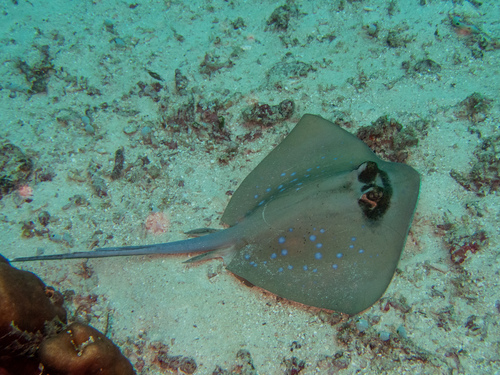
The bluespotted ribbontail ray (Taeniura lymma) is a species of stingray in the family Dasyatidae. Found from the intertidal zone to a depth of 30 m (100 ft), this species is common throughout the tropical Indian and western Pacific Oceans in nearshore, coral reef–associated habitats. It is a fairly small ray, not exceeding 35 cm (14 in) in width, with a mostly smooth, oval pectoral fin disc, large protruding eyes, and a relatively short and thick tail with a deep fin fold underneath. It can be easily identified by its striking color pattern of many electric blue spots on a yellowish background, with a pair of blue stripes on the tail.
At night, small groups of bluespotted ribbontail rays follow the rising tide onto sandy flats to root for small benthic invertebrates and bony fishes in the sediment. When the tide recedes, the rays separate and withdraw to shelters on the reef. Reproduction is Ovoviviparity. With the females giving birth to litters of up to seven young. This ray is capable of injuring humans with its venomous tail spines, though it prefers to flee if threatened. Because of its beauty and size, the bluespotted ribbontail ray is popular with private aquarists despite being poorly suited to captivity. Wikipedia →
Closest Relatives at Raja Ampat
Moluccan Bluespotted Maskray
Neotrygon moluccensis

Mangrove Ray
Urogymnus granulatus

Blotched Fantail Ray
Taeniurops meyeni

Oriental Bluespotted Maskray
Neotrygon orientale

Reticulate Whipray
Himantura uarnak

Pink Whipray
Pateobatis fai

Thorny Ray
Urogymnus asperrimus

Broad Cowtail Stingray
Pastinachus ater

Dragon stingray
Pateobatis jenkinsii

Munguna
Mobula alfredi

Oceanic Manta Ray
Mobula birostris

Ox Ray
Mobula kuhlii
Global Distribution
Where this species is recorded worldwide. Restricted to human observations from 2019 onwards — the same kind of record and the same period the probabilities on this page are built from, so collar-tracking studies, camera-trap arrays and museum specimens are excluded. Around Santa Rosa that removes 5,924 GPS fixes from a handful of tagged jaguars.
where this species is recorded (GBIF density — it tracks where observers go, not how likely a sighting is) · parks where it occurs — tap a pin for the sighting probability there
Parks Where Found
| # | Park | Country | Daily sighting probability |
|---|---|---|---|
| 1 | Tangkoko Nature Reserve | 🇮🇩 Indonesia | |
| 2 | Ningaloo Marine Park | 🇦🇺 Australia | |
| 3 | Raja Ampat | 🇮🇩 Indonesia |
Quick answers
What are the chances of seeing a Reef ray in Raja Ampat?
About 50% of wildlife watchers report a Reef ray sighting in Raja Ampat, based on 55 verified sightings from GBIF citizen-science data.
When is the best time to see Reef ray in Raja Ampat?
July has the highest sighting rate for Reef ray in Raja Ampat in our monthly data.