

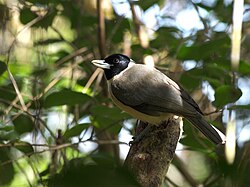
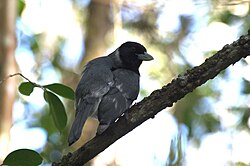

Pollen's Vanga
Xenopirostris polleni
Silhouette: Sheatherius · PhyloPic
- KingdomAnimalia (Animals)
- PhylumChordata (Chordates)
- ClassAves (Birds)
- OrderPasseriformes (Perching Birds)
- FamilyVangidae (Vangas, Helmetshrikes, and Allies)
- GenusXenopirostris (Black-headed Vangas)
- SpeciesXenopirostris polleni (Pollen's Vanga)
About the Pollen's Vanga
Pollen's vanga (Xenopirostris polleni) is a species of bird in the family Vangidae. It is endemic to eastern Madagascar. Its natural habitats are subtropical or tropical moist lowland forests and subtropical or tropical moist montane forests. It is threatened by habitat loss. Wikipedia →
Recent sightings of Pollen's Vanga in Ranomafana National Park
LIVEiNaturalistClosest Relatives at Ranomafana National Park

 Tylas Vanga
Tylas eduardi

Red-tailed Vanga
Calicalicus madagascariensis

Common Newtonia
Newtonia brunneicauda

Blue Vanga
Cyanolanius madagascarinus

Ward's Flycatcher
Pseudobias wardi

Crossley's Babbler
Mystacornis crossleyi

White-headed Vanga
Artamella viridis

Chabert Vanga
Leptopterus chabert

Dark Newtonia
Newtonia amphichroa

Hook-billed Vanga
Vanga curvirostris

Rufous Vanga
Schetba rufa

Nuthatch-Vanga
Hypositta corallirostris
Global Distribution
Warmer areas are where this animal is recorded most often.
Parks Where Found
| # | Park | Country | Daily sighting probability |
|---|---|---|---|
| 1 | Ranomafana National Park | 🇲🇬 Madagascar |
More parks will be added in future updates.
Quick answers
What are the chances of seeing a Pollen's Vanga in Ranomafana National Park?
About 40% of wildlife watchers report a Pollen's Vanga sighting in Ranomafana National Park, based on 298 verified sightings from GBIF citizen-science data.
When is the best time to see Pollen's Vanga in Ranomafana National Park?
July has the highest sighting rate for Pollen's Vanga in Ranomafana National Park in our monthly data.