
Bendire's Thrasher
Toxostoma bendirei
- KingdomAnimalia (Animals)
- PhylumChordata (Chordates)
- ClassAves (Birds)
- OrderPasseriformes (Perching Birds)
- FamilyMimidae (Mockingbirds and Thrashers)
- GenusToxostoma (Typical Thrashers)
- SpeciesToxostoma bendirei (Bendire's Thrasher)
About the Bendire's Thrasher
Bendire's thrasher (Toxostoma bendirei) is a medium-sized species of thrasher native to the southwestern United States and northwestern Mexico. It is 23–28 centimetres (9.1–11.0 in) long, with a long tail and a medium-sized bill. Coloration is grayish-brown on its upperparts with paler, faintly dark streaked underparts. The base of the lower bill is often pale, the eyes are bright yellow, and the tips of the tail are white-tipped.
Because of its similar coloration and structure to the curve-billed thrasher, the two birds are very easy to mistake for one another. The Bendire's thrasher's shorter bill is a distinguishing feature when comparing mature birds, but it is still easy to misidentify an adult Bendire's thrasher as a young curve-billed thrasher as its beak has not grown to a mature length. The Bendire's thrasher's yellow eyes and pale-based lower mandible are additional markings which aid in separation from the curve-billed thrasher.
Bendire's thrasher lives in the brush-filled deserts and valleys and drylands of the south-western United States, mainly along the southern border that Arizona and New Mexico shares with Mexico... Wikipedia →
Closest Relatives at Saguaro National Park

Curve-billed Thrasher
Toxostoma curvirostre

Crissal Thrasher
Toxostoma crissale

Brown Thrasher
Toxostoma rufum

Northern Mockingbird
Mimus polyglottos
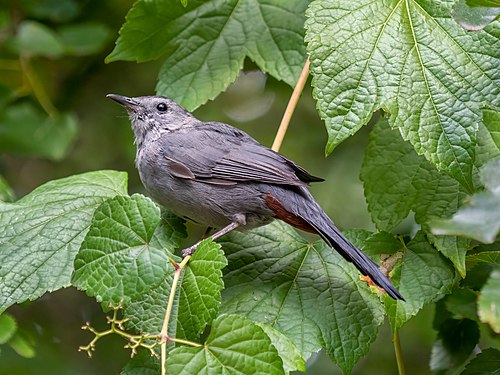
Gray Catbird
Dumetella carolinensis

Sage Thrasher
Oreoscoptes montanus

Verdin
Auriparus flaviceps

House Finch
Haemorhous mexicanus

Lesser Goldfinch
Spinus psaltria

Abert's Towhee
Melozone aberti

Vermilion Flycatcher
Pyrocephalus rubinus

Yellow-rumped Warbler
Setophaga coronata
Global Distribution
Where this species is recorded worldwide. Restricted to human observations from 2019 onwards — the same kind of record and the same period the probabilities on this page are built from, so collar-tracking studies, camera-trap arrays and museum specimens are excluded. Around Santa Rosa that removes 5,924 GPS fixes from a handful of tagged jaguars.
where this species is recorded (GBIF density — it tracks where observers go, not how likely a sighting is) · parks where it occurs — tap a pin for the sighting probability there
Parks Where Found
| # | Park | Country | Daily sighting probability |
|---|---|---|---|
| 1 | Death Valley National Park | 🇺🇸 United States | |
| 2 | Grand Canyon National Park | 🇺🇸 United States | |
| 3 | Joshua Tree National Park | 🇺🇸 United States | |
| 4 | Saguaro National Park | 🇺🇸 United States |