

Egyptian Cobra
Naja haje
Silhouette: V. Deepak · PhyloPic
- KingdomAnimalia (Animals)
- PhylumChordata (Chordates)
- ClassSquamata
- FamilyElapidae (Elapid Snakes)
- GenusNaja (Cobras)
- SpeciesNaja haje (Egyptian Cobra)
About the Egyptian Cobra
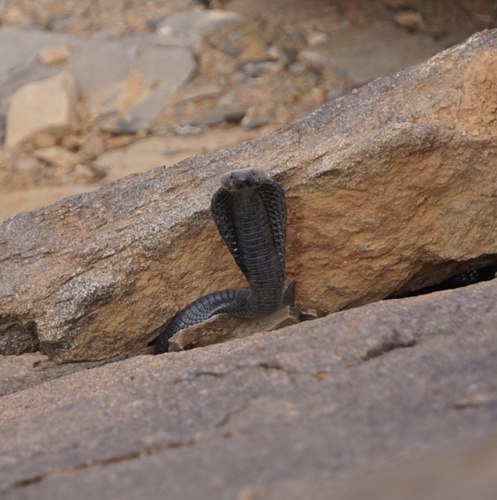
The Egyptian cobra (Naja haje) is one of the most venomous species of snakes inhabiting Northern Africa. It averages roughly 1.4 metres (4.6 ft) in length; the longest specimen recorded so far measured 2.59 metres (8.5 ft).
Naja haje was first described in Europe by Swedish zoologist Carl Linnaeus in 1758. The generic name naja is a Latinisation of the Sanskrit word nāgá (नाग) meaning "cobra". The specific epithet haje is derived from the Arabic word ḥayya (حية) which means "snake". The snouted cobra (Naja annulifera) and Anchieta's cobra (Naja anchietae) were formerly regarded as subspecies of Naja haje, but have since been shown to be distinct species. The Arabian populations were long recognised as a separate subspecies, Naja haje arabica, and the black populations from Morocco sometimes as Naja haje legionis. A 2009 study found that the Arabian cobra constitutes a separate species, Naja arabica, whereas the subspecies legionis was synonymised with N. haje. The same study also identified the West African savanna populations as a separate species and described it as Naja senegalensis.
The cladogram below illustrates the taxonomy and relationships among... Wikipedia →
Recent sightings of Egyptian Cobra in Serengeti National Park
LIVEiNaturalistClosest Relatives at Serengeti National Park


Global Distribution
Warmer areas are where this animal is recorded most often.
Parks Where Found
| # | Park | Country | Daily sighting probability |
|---|---|---|---|
| 1 | Ngorongoro Conservation Area | 🇹🇿 Tanzania | |
| 2 | Serengeti National Park | 🇹🇿 Tanzania |