



Tree Runner
Plica plica
Silhouette: Natalie Claunch · PhyloPic
- KingdomAnimalia (Animals)
- PhylumChordata (Chordates)
- ClassSquamata
- FamilyTropiduridae (Neotropical Ground Lizards)
- GenusPlica (Treerunners)
- SpeciesPlica plica (Tree Runner)
About the Tree Runner
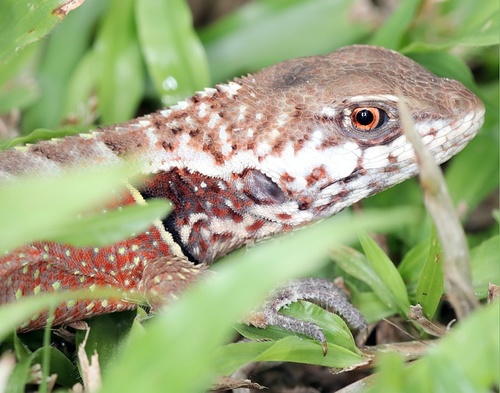
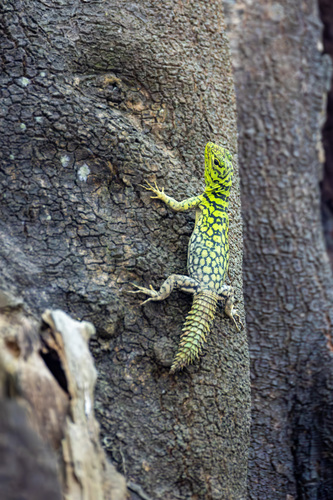
Plica plica is a species of lizard in the family Tropiduridae, the Neotropical ground lizards. Its common names include collared tree lizard, collared tree runner,tree runner, and harlequin racerunner. In Guyana it is known as wakanama.
Plica plica is native to South America, including Colombia, Venezuela, Suriname, French Guiana, Brazil, Bolivia, Peru, and Ecuador. It can also be found in the Caribbean, on Trinidad. It was long ago collected in Grenada, but these specimens were likely waifs.
Plica plica is diurnal, active during the day, and arboreal, living most of its life adhered to the sides of tree trunks. It comes down from the trees only to lay eggs, which it places inside rotting palm trees and in palm litter. The female produces at least two clutches per reproductive season, with an average clutch size of three eggs. Larger females lay more eggs than smaller ones. The embryos are sensitive to vibration; lightly rolling an egg can induce it to hatch early. The hatchling is known to explode from the egg and immediately begin running, reaching up to half a meter on its first sprint. The diet of the lizard is composed of insects, and it specializes... Wikipedia →
Recent sightings of Tree Runner in Tambopata National Reserve
LIVEiNaturalistClosest Relatives at Tambopata National Reserve


Global Distribution
Warmer areas are where this animal is recorded most often.
Parks Where Found
| # | Park | Country | Daily sighting probability |
|---|---|---|---|
| 1 | Brownsberg Nature Park | 🇸🇷 Suriname | |
| 2 | Sierra de la Macarena National Park | 🇨🇴 Colombia | |
| 3 | Tambopata National Reserve | 🇵🇪 Peru | |
| 4 | Yasuní National Park | 🇪🇨 Ecuador | |
| 5 | Cuyabeno Wildlife Reserve | 🇪🇨 Ecuador | |
| 6 | Manu National Park | 🇵🇪 Peru | |
| 7 | Canaima National Park | 🇻🇪 Venezuela | |
| 8 | Cordillera Azul National Park | 🇵🇪 Peru | |
| 9 | Amacayacu National Natural Park | 🇨🇴 Colombia |
Quick answers
What are the chances of seeing a Tree Runner in Tambopata National Reserve?
About 30% of wildlife watchers report a Tree Runner sighting in Tambopata National Reserve, based on 92 verified sightings from GBIF citizen-science data.
When is the best time to see Tree Runner in Tambopata National Reserve?
October has the highest sighting rate for Tree Runner in Tambopata National Reserve in our monthly data.