



Chinese Hwamei
Garrulax canorus
Silhouette: Jiekun He · PhyloPic
- KingdomAnimalia (Animals)
- PhylumChordata (Chordates)
- ClassAves (Birds)
- OrderPasseriformes (Perching Birds)
- FamilyLeiothrichidae (Laughingthrushes and Allies)
- GenusGarrulax (Typical Laughingthrushes)
- SpeciesGarrulax canorus (Chinese Hwamei)
About the Chinese Hwamei
The Chinese hwamei or melodious laughingthrush (Garrulax canorus) is a passerine bird of eastern Asia in the laughingthrush family Leiothrichidae. The name "hwamei" comes from its Chinese name huà méi, which means "painted eyebrow", referring to the distinctive marking around the bird's eyes. The species is a popular cagebird because of its attractive song.
The Chinese hwamei was formally described by the Swedish naturalist Carl Linnaeus in 1758 in the tenth edition of his Systema Naturae. He placed it with the thrushes in the genus Turdus and coined the binomial name Turdus canorus. Linnaeus specified the type locality as Bengal and China but this has been restricted to Amoy (now Xiamen) in Fujian, China. The specific epithet is Latin meaning "melodious" (from canere "to sing"). The Chinese hwamei is now one of 14 laughingthrushes placed in the genus Garrulax that was introduced in 1831 by René Lesson.
Two subspecies are recognised: G. c. canorus, native to mainland Asia, and G. c. owstoni of Hainan Island. The Taiwan hwamei (G. taewanum) was formerly considered to be a subspecies of the Chinese hwamei but has recently been split as a separate species. This was based... Wikipedia →
Recent sightings of Chinese Hwamei in Taroko National Park
LIVEiNaturalistClosest Relatives at Taroko National Park
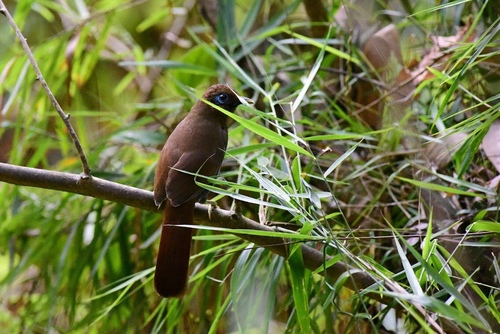
 Rusty Laughingthrush
Garrulax poecilorhynchus

Taiwan Hwamei
Garrulax taewanus

Black-throated Laughingthrush
Garrulax chinensis
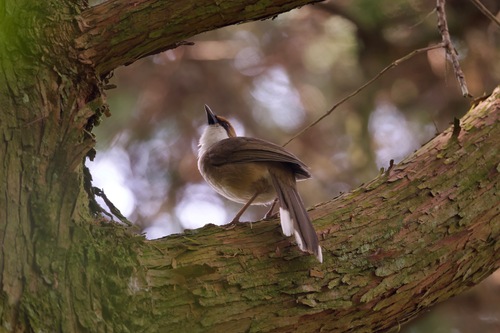
Rufous-crowned Laughingthrush
Garrulax ruficeps

 White-eared Sibia
Heterophasia auricularis

Steere's Liocichla
Liocichla steerii

White-whiskered Laughingthrush
Trochalopteron morrisonianum

Taiwan Barwing
Actinodura morrisoniana

 Large-billed Crow
Corvus macrorhynchos

Taiwan Yuhina
Yuhina brunneiceps

 Green-backed Tit
Parus monticolus

 Asian House Martin
Delichon dasypus
Global Distribution
Warmer areas are where this animal is recorded most often.
Parks Where Found
| # | Park | Country | Daily sighting probability |
|---|---|---|---|
| 1 | Nikko National Park | 🇯🇵 Japan | |
| 2 | Taroko National Park | 🇹🇼 Taiwan |