

False Habu
Pseudagkistrodon rudis
Silhouette: Alex Slavenko · PhyloPic
- KingdomAnimalia (Animals)
- PhylumChordata (Chordates)
- ClassSquamata
- FamilyColubridae (Colubrid Snakes)
- GenusPseudagkistrodon
- SpeciesPseudagkistrodon rudis (False Habu)
About the False Habu
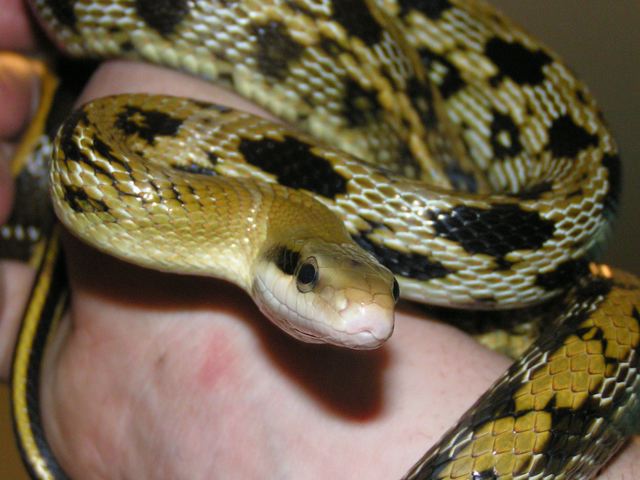
Pseudagkistrodon is a monotypic genus of snake in the subfamily Natricinae of the family Colubridae. The sole species is Pseudagkistrodon rudis, also known commonly as the red keelback, the false habu, and the false viper. It is found in southwest, south, and east China and in Taiwan. One subspecies, Pseudagkistrodon rudis multiprefrontalis (Zhao & Jiang, 1981) from Sichuan is recognized as being valid, in addition to the nominotypical subspecies.
Pseudagkistrodon rudis appears to mimic vipers, and the head takes a triangular shape when the snake takes a defensive position. The species grows to 120 cm (47 in) in total length (tail included). The head is broad and distinct from the neck. The dorsum is brown to grey brown, sometimes tinted with bronze, and interrupted by dark markings which are variable in size, disposition, and intensity of pigmentation.
Female Pseudagkistrodon rudis give birth to 12–27 young per litter in late summer and autumn. The newly hatched young measure 13–20 cm (5.1–7.9 in) cm in total length. Pseudagkistrodon rudis is a common species that inhabits montane meadows, riparian areas of brooks, valleys, road... Wikipedia →
Recent sightings of False Habu in Taroko National Park
LIVEiNaturalistClosest Relatives at Taroko National Park

 Red-banded Snake
Lycodon rufozonatus
Beauty Rat Snake
Elaphe taeniura

Chinese Green Snake
Ptyas major

Big-Eyed Ratsnake
Ptyas dhumnades

Kelung Cat Snake
Boiga kraepelini

 Collared Reed Snake
Calamaria pavimentata

King Ratsnake
Elaphe carinata

Mandarin Ratsnake
Euprepiophis mandarinus
Maki's Keelback
Hebius miyajimae

Kosempo Keelback
Hebius sauteri

Black-banded Trinket Snake
Oreocryptophis porphyraceus

Stejneger's Bamboo Snake
Pseudoxenodon stejnegeri
Global Distribution
Warmer areas are where this animal is recorded most often.
Parks Where Found
| # | Park | Country | Daily sighting probability |
|---|---|---|---|
| 1 | Taroko National Park | 🇹🇼 Taiwan |
More parks will be added in future updates.