

Rufous Crab Hawk
Buteogallus aequinoctialis
Silhouette: Sheatherius · PhyloPic
- KingdomAnimalia (Animals)
- PhylumChordata (Chordates)
- ClassAves (Birds)
- OrderAccipitriformes (Hawks, Eagles, Kites, and Allies)
- FamilyAccipitridae (Hawks, Eagles, and Kites)
- GenusButeogallus (Black Hawks and Allies)
- SpeciesButeogallus aequinoctialis (Rufous Crab Hawk)
About the Rufous Crab Hawk
The rufous crab hawk (Buteogallus aequinoctialis) or rufous crab-hawk, is a Near Threatened species of bird of prey in subfamily Accipitrinae, the "true" hawks, of family Accipitridae. It is found on Trinidad and along the South American coastline from eastern Venezuela to southern Brazil.
The rufous crab hawk was formally described in 1788 by the German naturalist Johann Friedrich Gmelin in his revised and expanded edition of Carl Linnaeus's Systema Naturae. He placed it with the eagles, hawks and relatives in the genus Falco and coined the binomial name Falco aequinoctialis. Gmelin based his description on the "Aequinoctial eagle" that had been described in 1781 by the English ornithologist John Latham from a specimen that formed part of a private collection in London. The specimen had come from Cayenne. The rufous crab hawk is now one of nine species placed in the genus Buteogallus that was introduced in 1830 by the French naturalist René Lesson. The genus name is a portmanteau of the genus name Buteo introduced in 1779 by Bernard Germain de Lacépède for the buzzards and the genus Gallus introduced in 1760 by Mathurin Jacques Brisson for the junglefowl... Wikipedia →
Recent sightings of Rufous Crab Hawk in Tijuca National Park
LIVEiNaturalistClosest Relatives at Tijuca National Park

 Roadside Hawk
Rupornis magnirostris

 Rufous-thighed Kite
Harpagus diodon

 Gray-headed Kite
Leptodon cayanensis

 Short-tailed Hawk
Buteo brachyurus

Black Hawk-Eagle
Spizaetus tyrannus

 Harris' Hawk
Parabuteo unicinctus

White-necked Hawk
Leucopternis lacernulatus
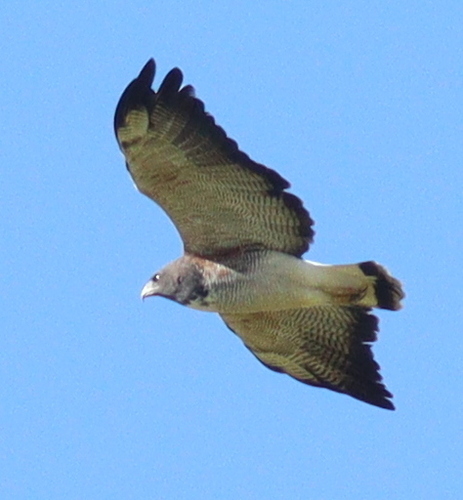
White-tailed Hawk
Buteo albicaudatus

Zone-tailed Hawk
Buteo albonotatus

 Sharp-shinned Hawk
Accipiter striatus

Black-chested Buzzard-Eagle
Geranoaetus melanoleucus

Hook-billed Kite
Chondrohierax uncinatus
Global Distribution
Warmer areas are where this animal is recorded most often.
Parks Where Found
| # | Park | Country | Daily sighting probability |
|---|---|---|---|
| 1 | Caroni Swamp | 🇹🇹 Trinidad and Tobago | |
| 2 | Tijuca National Park | 🇧🇷 Brazil |