
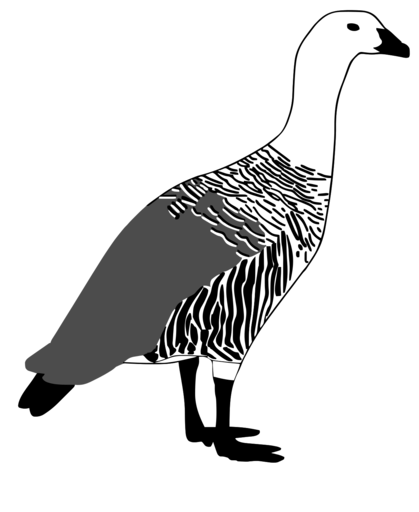
Kelp Goose
Chloephaga hybrida
Silhouette: Edwin Price · PhyloPic
- KingdomAnimalia (Animals)
- PhylumChordata (Chordates)
- ClassAves (Birds)
- OrderAnseriformes (Waterfowl)
- FamilyAnatidae (Ducks, Geese, and Swans)
- GenusChloephaga (Austral Sheldgeese)
- SpeciesChloephaga hybrida (Kelp Goose)
About the Kelp Goose
The kelp goose (Chloephaga hybrida) is a species of waterfowl in tribe the Tadornini of the subfamily Anserinae. It is found in Argentina, Chile, and the Falkland Islands. The kelp goose has two subspecies, the nominate C. h. hybrida and C. h. malvinarum.
The kelp goose is 55 to 65 cm (22 to 26 in) long. Males of the nominate subspecies weigh 2.54 to 2.58 kg (5.6 to 5.7 lb) and females 2.00 to 2.02 kg (4.4 to 4.5 lb). Subspecies C. h. malvinarum is heavier: Males weigh 3.25 to 3.60 kg (7.2 to 7.9 lb) and females 2.05 to 2.80 kg (4.5 to 6.2 lb). The two subspecies have the same plumage but the sexes are completely different. Adult males are entirely white but for a black bill with a pink spot on the maxilla and yellow legs and feet. Adult females have a pale brown crown and chocolate brown head, neck, and mantle. Their breast and flanks have black and white bars and their back, tail, and undertail coverts are white. Their bill is pink and their legs and feet yellow. Juvenile males resemble adult females but with brown "shoulders" and greenish-yellow legs and feet. Juvenile females have a dark crown and dark uppertail coverts. Wikipedia →
Recent sightings of Kelp Goose in Torres del Paine National Park
LIVEiNaturalistClosest Relatives at Torres del Paine National Park

 Upland Goose
Chloephaga picta

 Ashy-headed Goose
Chloephaga poliocephala

Ruddy-headed Goose
Chloephaga rubidiceps

 Yellow-billed Pintail
Anas georgica

Crested Duck
Lophonetta specularioides

 Chiloé Wigeon
Mareca sibilatrix

 Speckled Teal
Anas flavirostris

Spectacled Duck
Speculanas specularis

 Flying Steamer-Duck
Tachyeres patachonicus

 Black-necked Swan
Cygnus melancoryphus

Red Shoveler
Spatula platalea

Andean Ruddy Duck
Oxyura ferruginea
Global Distribution
Warmer areas are where this animal is recorded most often.
Parks Where Found
| # | Park | Country | Daily sighting probability |
|---|---|---|---|
| 1 | Tierra del Fuego National Park | 🇦🇷 Argentina | |
| 2 | Torres del Paine National Park | 🇨🇱 Chile |