
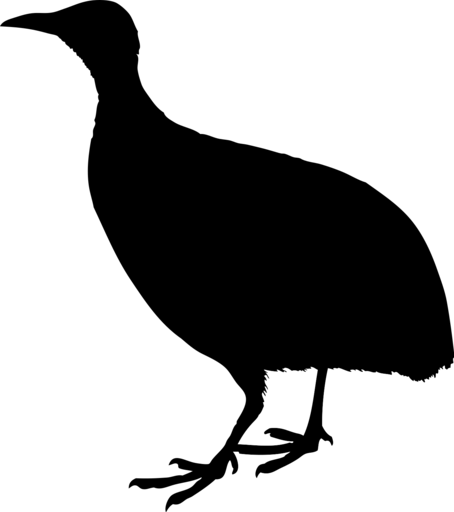
Patagonian Tinamou
Tinamotis ingoufi
Silhouette: George Edward Lodge · PhyloPic
- KingdomAnimalia (Animals)
- PhylumChordata (Chordates)
- ClassAves (Birds)
- OrderTinamiformes (Tinamous)
- FamilyTinamidae (Tinamous)
- GenusTinamotis (Three-toed Tinamous)
- SpeciesTinamotis ingoufi (Patagonian Tinamou)
About the Patagonian Tinamou
The Patagonian tinamou (Tinamotis ingoufi) also known as Ingouf's tinamou is a member of one of the most ancient groups of paleognath birds, the tinamous. This species is native to southern South America. The Patagonian tinamou is a monotypic species. All tinamou are from the family Tinamidae, and in the larger scheme are also ratites. Unlike other ratites, tinamous can fly, although in general, they are not strong fliers. All ratites evolved from prehistoric flying birds, and tinamous are the closest living relative of these birds.
The Patagonian tinamou is approximately 35 cm (14 in) in length. Its upper parts are grey spotted with black, its throat is white, its breast is rufous and its belly is cinnamon. Like other tinamous, the ornate tinamou eats fruit off the ground or low-lying bushes. They also eat small amounts of invertebrates, flower buds, tender leaves, seeds, and roots. The male incubates the eggs which may come from as many as 4 different females, and then will raise them until they are ready to be on their own, usually 2–3 weeks. The nest is located on the ground in dense brush or between raised root buttresses.
�... Wikipedia →
Recent sightings of Patagonian Tinamou in Torres del Paine National Park
LIVEiNaturalistGlobal Distribution
Warmer areas are where this animal is recorded most often.
Parks Where Found
| # | Park | Country | Daily sighting probability |
|---|---|---|---|
| 1 | Torres del Paine National Park | 🇨🇱 Chile |
More parks will be added in future updates.