

Tree skink
Trachylepis planifrons
Silhouette: David Orr · PhyloPic
- KingdomAnimalia (Animals)
- PhylumChordata (Chordates)
- ClassSquamata
- FamilyScincidae (Skinks)
- GenusTrachylepis (Afro-Malagasy Mabuyas)
- SpeciesTrachylepis planifrons (Tree skink)
14 Verified sightings at Tsavo East National Park From 2019 to 2026
27 Verified sightings across all 6 parks From 2019 to 2026
January Best month highest sighting rate
☀️ Diurnal When it's spotted during daytime hours (6am–6pm)
About the Tree skink
The tree skink (Trachylepis planifrons) is a species of skink found in Africa. Wikipedia →
Recent sightings of Tree skink in Tsavo East National Park
LIVEiNaturalistClosest Relatives at Tsavo East National Park

 Rainbow Skink
Trachylepis margaritifera

LC
Speckle-lipped Mabuya
Trachylepis maculilabris

LC
Sudan Mabuya
Trachylepis brevicollis
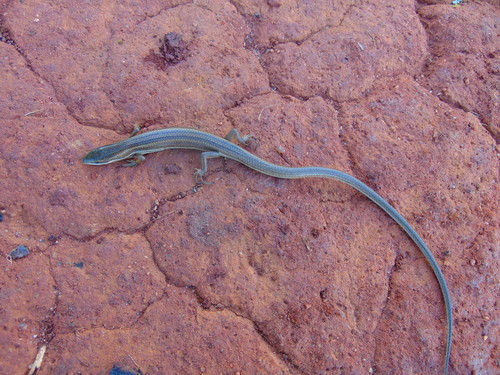
LC
Grass-top skink
Trachylepis megalura

LC
Variable Skink
Trachylepis varia

LC
African Five-lined Skink
Trachylepis quinquetaeniata

LC
African Striped Skink
Trachylepis striata

LC
East-African Snake-eyed Skink
Cryptoblepharus africanus
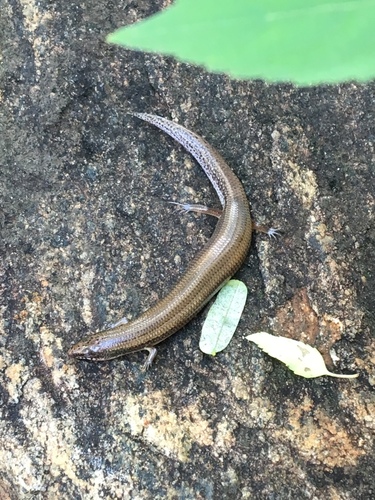
LC
Somali Writhing Skink
Mochlus somalicus

LC
Kilimanjaro Five-toed Skink
Leptosiaphos kilimensis
Global Distribution
Warmer areas are where this animal is recorded most often.
Parks Where Found
| # | Park | Country | Daily sighting probability |
|---|---|---|---|
| 1 | Tsavo East National Park | 🇰🇪 Kenya | |
| 2 | Ruaha National Park | 🇹🇿 Tanzania | |
| 3 | Akagera National Park | 🇷🇼 Rwanda | |
| 4 | Tarangire National Park | 🇹🇿 Tanzania | |
| 5 | Amboseli National Park | 🇰🇪 Kenya | |
| 6 | Ngorongoro Conservation Area | 🇹🇿 Tanzania |
Quick answers
What are the chances of seeing a Tree skink in Tsavo East National Park?
About 10% of wildlife watchers report a Tree skink sighting in Tsavo East National Park, based on 14 verified sightings from GBIF citizen-science data.
When is the best time to see Tree skink in Tsavo East National Park?
January has the highest sighting rate for Tree skink in Tsavo East National Park in our monthly data.