

American Cinchona Plantation Tree Frog
Isthmohyla rivularis
Silhouette: Dmitry Bogdanov (vectorized by T. Michael Keesey) · PhyloPic
- KingdomAnimalia (Animals)
- PhylumChordata (Chordates)
- ClassAmphibia (Amphibians)
- OrderAnura (Frogs and Toads)
- FamilyHylidae (Hylid Tree Frogs)
- GenusIsthmohyla
- SpeciesIsthmohyla rivularis (American Cinchona Plantation Tree Frog)
About the American Cinchona Plantation Tree Frog
Isthmohyla rivularis is a rare species of frog in the family Hylidae. It occurs in the cordilleras of Tilarán, Central, and Talamanca in Costa Rica as well as adjacent western Panama. The species was thought to already have become extinct, but in 2007, it was re-discovered in the Monteverde Cloud Forest of Costa Rica when a single male was found. In 2008, a gravid female and few males were spotted. The common name American Cinchona Plantation treefrog has been suggested for it.
Males grow to 34 mm (1.3 in) and females to 37 mm (1.5 in) in snout–vent length. The snout is moderately short and acutely rounded. The tympanum is barely discernible. The fingers have large discs and are up to one-third webbed. The toes have discs that are slightly smaller than those on the fingers and are two-thirds webbed. The dorsal color varies from grey to light brown. Most specimens have a thin, dark line running through the eye. Other dark markings are variably present. The flanks are usually yellowish, but may in some individuals appear greenish or bluish. The iris is bronze and has black reticulations.
Isthmohyla rivularis is found along or in clear streams... Wikipedia →
Recent sightings of American Cinchona Plantation Tree Frog in Volcán Barú National Park
LIVEiNaturalistClosest Relatives at Volcán Barú National Park

 Giant Marine Toad
Rhinella horribilis
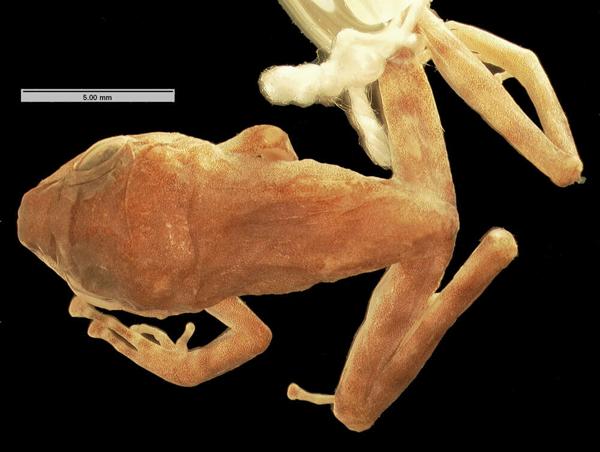
 Dunn's Robber Frog
Craugastor monnichorum

 Guayaquil Dwarf Frog
Engystomops pustulosus

 Golden-groined Robber Frog
Pristimantis cruentus
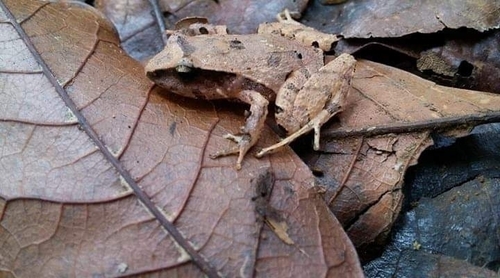
Cerro Utyum Robber Frog
Craugastor podiciferus
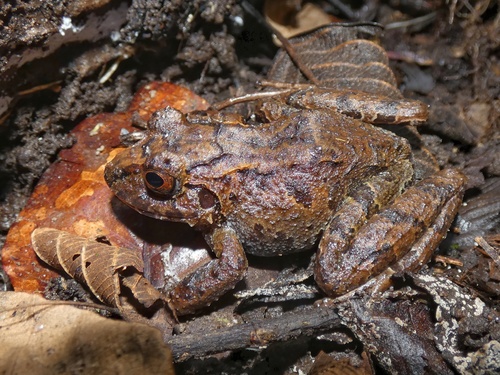
Banded-thighed Rain Frog
Craugastor melanostictus

 Musical Rain Frog
Pristimantis museosus

La Loma Robber Frog
Pristimantis caryophyllaceus

 Peralta Frog
Lithobates taylori

Yellow-flecked Glassfrog
Sachatamia albomaculata
Global Distribution
Warmer areas are where this animal is recorded most often.
Parks Where Found
| # | Park | Country | Daily sighting probability |
|---|---|---|---|
| 1 | La Amistad International Park (Panama) | 🇵🇦 Panama | |
| 2 | Volcán Barú National Park | 🇵🇦 Panama |