



Cool-temperate Water Skink
Eulamprus tympanum
Silhouette: David Orr · PhyloPic
- KingdomAnimalia (Animals)
- PhylumChordata (Chordates)
- ClassSquamata
- FamilyScincidae (Skinks)
- GenusEulamprus (Water Skinks)
- SpeciesEulamprus tympanum (Cool-temperate Water Skink)
About the Cool-temperate Water Skink
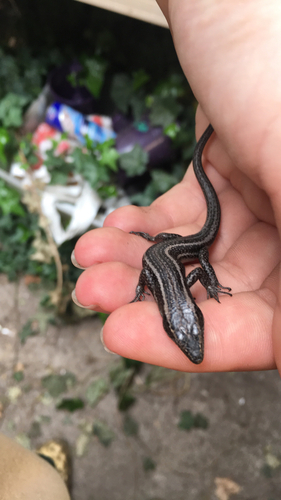
The southern water skink, cool-temperate water-skink, highland water skink, or Dreeite water skink (Eulamprus tympanum) is a medium-sized (maximum snout-vent length c. 100 mm) species of skink that is endemic to Australia. These skinks are found in New South Wales, South Australia, Victoria as well as on Tasmania's Rodondo Island in the Bass Strait. They are viviparous, mating in spring, and giving birth to live young in mid to late summer.
The southern water skink is a medium-sized skink with a snout-to-vent length of up to 85 mm (3.3 in). The head and body are mainly olive-brown, with darker speckles. The flanks are olive-brown with pale speckling. This species is native to southeastern Australia. It is found in the states of New South Wales, Victoria, the eastern part of Southern Australia and Tasmania, where it only occurs on Rodondo Island. Its habitat is in the vicinity of fresh water and its altitudinal range extends from sea level to near the top of Mount Kosciuszko.
The skink usually lives near small creeks, hunting for small prey such as invertebrates, tadpoles, small frogs and other small skinks. Its metabolic... Wikipedia →
Recent sightings of Cool-temperate Water Skink in Wilsons Promontory National Park
LIVEiNaturalistClosest Relatives at Wilsons Promontory National Park

 Southern Water Skink
Eulamprus heatwolei

White's Rock-skink
Liopholis whitii

Blotched Bluetongue
Tiliqua nigrolutea

 Pale-flecked Garden Sunskink
Lampropholis guichenoti

Metallic Coolskink
Carinascincus metallicus

Eastern Three-lined Skink
Acritoscincus duperreyi

Eastern Mourning Skink
Lissolepis coventryi

McCoy's Skink
Anepischetosia maccoyi

Southern Weasel Skink
Saproscincus mustelinus
 Trunk-climbing Cool-skink
Pseudemoia spenceri

Rawlinson's Window-eyed Skink
Pseudemoia rawlinsoni

Southern Forest Coolskink
Carinascincus coventryi
Global Distribution
Warmer areas are where this animal is recorded most often.
Parks Where Found
| # | Park | Country | Daily sighting probability |
|---|---|---|---|
| 1 | Grampians National Park | 🇦🇺 Australia | |
| 2 | Wilsons Promontory National Park | 🇦🇺 Australia | |
| 3 | Great Otway National Park | 🇦🇺 Australia | |
| 4 | Kosciuszko National Park | 🇦🇺 Australia | |
| 5 | Blue Mountains National Park | 🇦🇺 Australia |
Quick answers
What are the chances of seeing a Cool-temperate Water Skink in Wilsons Promontory National Park?
About 60% of wildlife watchers report a Cool-temperate Water Skink sighting in Wilsons Promontory National Park, based on 165 verified sightings from GBIF citizen-science data.
When is the best time to see Cool-temperate Water Skink in Wilsons Promontory National Park?
December has the highest sighting rate for Cool-temperate Water Skink in Wilsons Promontory National Park in our monthly data.